Introduction
Few parts of sales make people as nervous as picking up the phone to call a complete stranger. Yet in many sales jobs, especially entry-level SDR and inside sales roles in the US, it is a core part of the work, and people who get good at it tend to move up quickly.
This guide explains what cold calling is, why companies still use it, a simple structure for every call and nine easy steps to make your calls calmer, more respectful and more successful.
- Cold call = a call to someone who has not asked to hear from you.
- Goal: start a conversation and book a next step, not close a sale.
- Preparation and a clear structure matter more than talent.
Table of Contents
What Is Cold Calling?
Cold calling is the practice of phoning potential customers who have had no previous contact with you or your company. The person is “cold” because they are not expecting your call and may never have heard of you.
It is the opposite of a warm call, where the person already knows you, for example because they downloaded a guide, attended a webinar or were referred by a friend. In B2B sales, the usual goal of a cold call is to book a short meeting, not to sell on the spot.
- Cold: no prior contact or interest.
- Warm: some prior contact, referral or interest.
- Hot: the person has asked to talk or buy.
How Does Cold Calling Work?
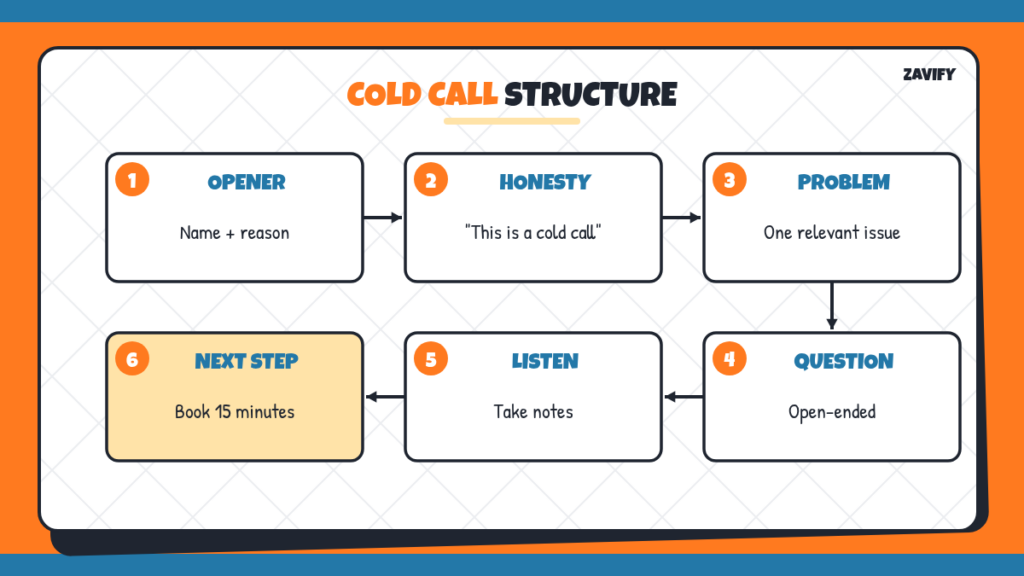
A good cold call usually follows a short, simple structure. It should feel like a conversation, not a script being read aloud.
| Part | What You Do | Example |
|---|---|---|
| Opener | Introduce yourself and give a reason for calling | “Hi Sam, it’s Alex from Brightdesk. I’ll be quick.” |
| Reason | Mention a problem they likely have | “I work with clinic managers who lose time to missed appointments.” |
| Question | Ask an open question | “How are you handling no-shows today?” |
| Listen | Let them talk and take notes | Follow up on what they say |
| Next step | Suggest a short meeting | “Would a 15-minute call on Thursday be useful?” |
Most calls end without a meeting, and that is normal. The aim is to have respectful conversations consistently, because a small percentage turning into meetings is what fills a sales pipeline.
1. Research Before You Dial
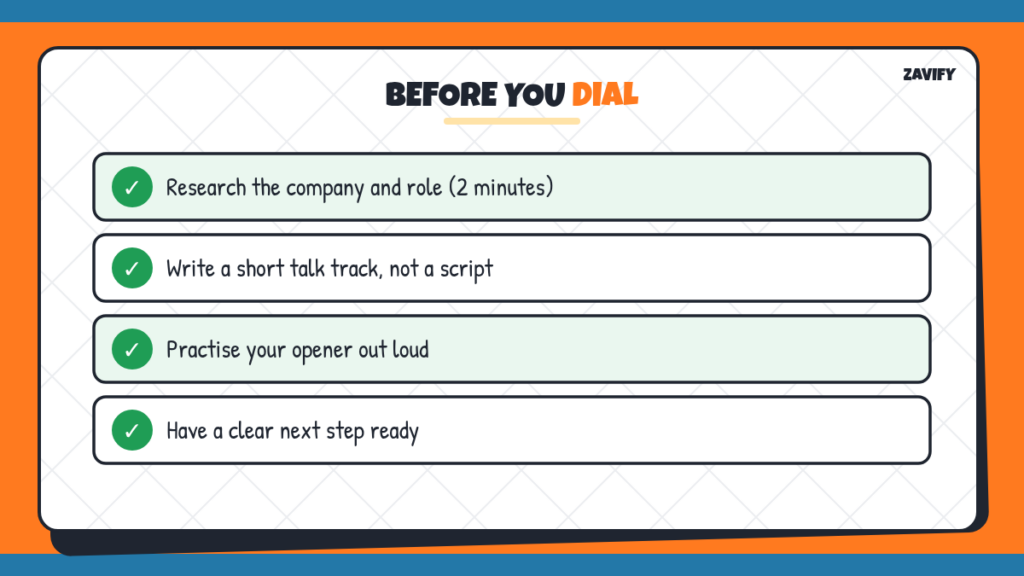
Spend a couple of minutes looking at the company website and the person’s role. One relevant detail, such as a new location or a recent hiring push, makes your call sound personal instead of random.
2. Write a Short Talk Track
Prepare a short outline rather than a word-for-word script: who you are, why you are calling, one question and one suggested next step. Bullet points help you stay natural.
3. Practise Out Loud
Say your opener out loud ten times before your first call. Role-play with a friend or teammate. Practice removes most of the nerves, because your mouth already knows the words.
4. Pick the Right Time
Many reps find early morning and late afternoon work well, when people are at their desks but not yet in meetings. Test different times and track which ones lead to the most conversations.
5. Open With Honesty
Be clear that it is a cold call. Something like “This is a cold call, so feel free to hang up, but can I tell you why I called?” often works better than pretending you know the person. Honesty builds trust quickly.
6. Ask Questions Before You Pitch
People rarely want to hear a product description from a stranger. Ask about their current situation and challenges first. Your goal is to discover whether there is a real problem worth discussing.
7. Handle Pushback Calmly
You will hear “Not interested,” “Send me an email” or “We already have something.” Stay polite and curious. Ask one short follow-up question, and if the answer is still no, thank them and move on. Our guide on how to handle sales objections covers this in detail.
8. Always Suggest a Clear Next Step
If the conversation goes well, propose a specific, short meeting with a date and time. Vague endings like “I’ll follow up sometime” usually lead nowhere.
9. Track Your Numbers
Record dials, conversations and meetings booked. Over time you will see your connection rate and conversion rate, and you can test small changes to your opener or timing.
Cold Calling Rules You Should Know
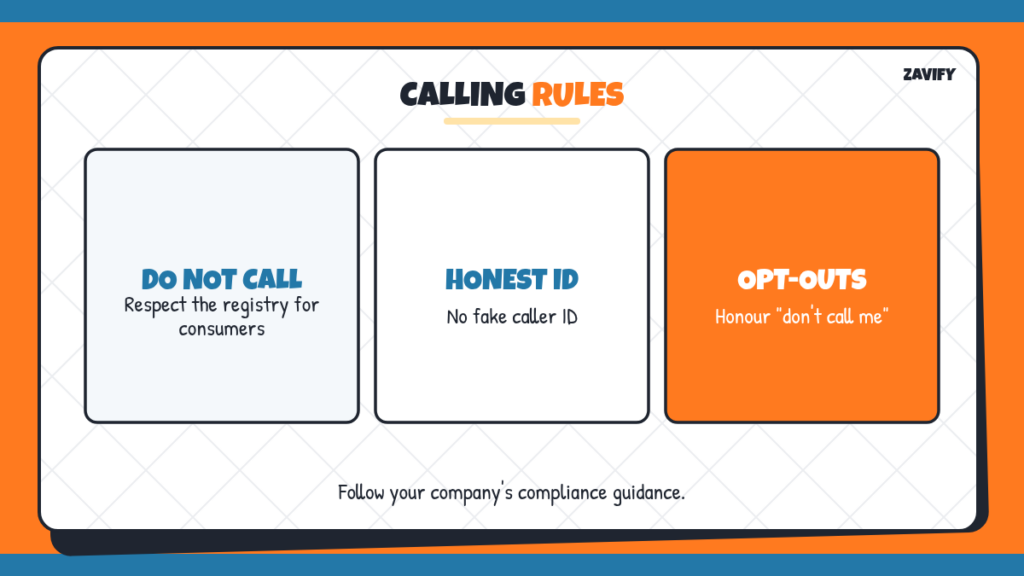
Calls to consumers in the US are regulated. The National Do Not Call Registry, managed by the Federal Trade Commission, lets people opt out of most telemarketing calls, and there are rules on calling hours, caller ID and automated dialing. Business-to-business calls are treated differently in many cases, but state rules vary.
As a new rep, follow your company’s compliance guidance, never use deceptive caller ID and always respect a request not to be called again.
Example Cold Call Opening Lines
Here are a few openers you can adapt. Keep them short and honest:
- “Hi Jordan, it’s Priya from Leadwise. This is a cold call; do you have 30 seconds for me to explain why I called?”
- “Hi Chris, I noticed you’re hiring three new sales reps. I help teams onboard reps faster. Is that a priority right now?”
- “Hi Taylor, I’m calling because many operations managers I speak with are struggling with late deliveries. Is that something you’re seeing?”
Is Cold Calling Still Effective?
It depends on the industry and how well it is done. Generic, scripted calls to random lists perform poorly. Targeted calls to well-researched prospects, combined with email and LinkedIn, still create many meetings for B2B teams. That is why many companies use cold calls as one part of a multi-channel approach rather than the only method.
How to Deal With Call Reluctance
Almost everyone feels nervous at first. Start with a small daily target, such as 20 calls, and focus on activity rather than results. Remember that rejection is about timing or need, not about you personally. Many reps find it easier to call in a focused block with teammates nearby, sharing wins and funny moments along the way.
Quick Cold Calling Tips From Experienced Reps
A few small habits make a big difference. Stand up while you call; many reps say it makes their voice sound more confident. Smile when you speak, because it changes your tone in a way people can hear. Keep a glass of water nearby and take a short break after every ten calls to reset.
Write down the exact words prospects use to describe their problems, then reuse that language in your next calls. Leave short voicemails that mention one specific reason for calling and your number twice. Finally, pair calls with a short follow-up email the same day, so the prospect can put a name to the voice.
Cold Calling as a Student or New Graduate
If you are preparing for an SDR interview, expect to do a mock cold call. Interviewers are not looking for perfection. They want to see that you stay calm, ask questions, listen and suggest a next step. Practising with a classmate a few times before the interview will give you a strong advantage over most candidates.
Common Cold Calling Mistakes
These mistakes make calls less effective:
- Reading a long script word for word.
- Pitching the product in the first ten seconds.
- Talking more than the prospect.
- Arguing when someone says no.
- Ending without a clear next step.
Frequently Asked Questions
What is cold calling?
It is calling potential customers who have had no previous contact with you, usually to start a conversation and book a meeting.
Is cold calling legal in the US?
Yes, with rules. Calls to consumers must follow regulations such as the National Do Not Call Registry and telemarketing rules. Business calls are often treated differently, but always follow your company’s compliance guidance.
What is a good cold calling success rate?
It varies widely by industry and list quality. Focus on improving your own conversation and meeting rates over time.
How long should a cold call be?
Often just a few minutes. The aim is to qualify interest and book a longer meeting, not to cover everything on the first call.
What should I say first on a cold call?
Introduce yourself, be honest that it is a cold call and give a short, relevant reason for calling.
How do I get over fear of cold calling?
Practise your opener out loud, set small daily goals and remember that rejection is a normal part of the process.
Conclusion
Cold calling is calling people who have not asked to hear from you, with the goal of starting a useful conversation. Research, a short talk track and honest questions make the biggest difference.
Practise, track your numbers and keep improving one small thing at a time. For the bigger picture, read our sales careers guide and our explainer on inside sales.