Introduction
Sales careers are among the few paths where a motivated graduate can earn well, get promoted quickly and build skills that are useful in almost any business. It is also one of the most misunderstood. Many students picture pushy salespeople or “cold calling all day,” and never consider it.
This guide is the starting point for our sales section. It explains the main sales careers, what they pay, the skills you need and nine easy steps to get your first job, with links to our deeper guides on each role.
- Sales roles range from retail to technical B2B selling.
- Pay usually mixes base salary and commission.
- Clear metrics mean fast feedback and promotion.
Table of Contents
What Are Sales Careers?
Sales careers are jobs focused on helping customers buy products or services, and on growing a company’s revenue. They range from retail sales associates in stores to account executives selling software to large companies and sales engineers supporting technical deals.
Almost every company needs salespeople, so sales careers exist in technology, healthcare, finance, manufacturing, education, real estate and more. That variety lets you choose an industry you find interesting.
- Entry-level: retail sales associate, SDR/BDR, inside sales rep.
- Mid-level: account executive, outside sales rep, account manager.
- Senior: enterprise account executive, sales manager, sales director.
How Do Sales Careers Work?
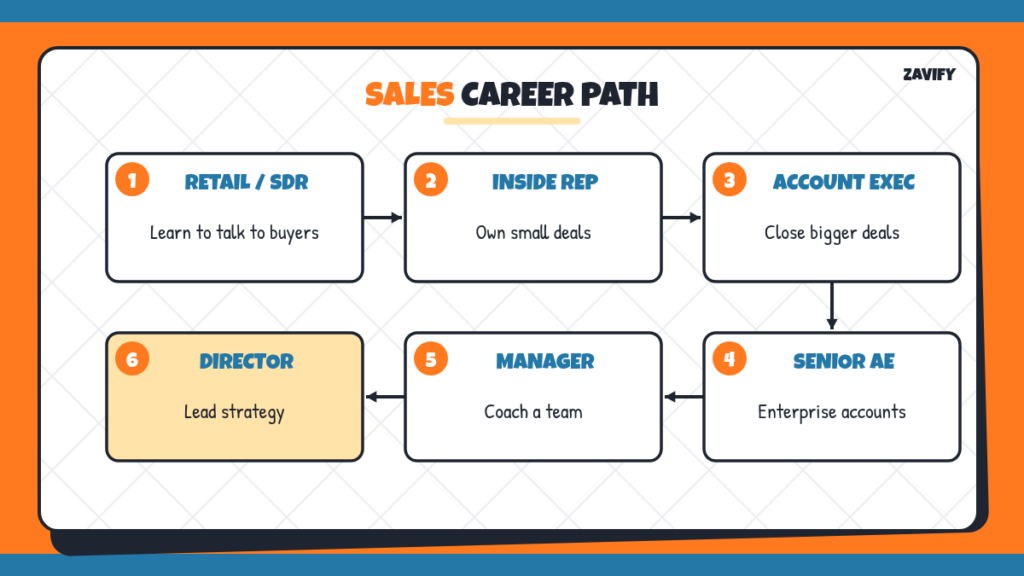
Here is an overview of common roles and what each involves:
| Role | What You Do | Where to Learn More |
|---|---|---|
| SDR / BDR | Find and qualify leads, book meetings | Inside sales guide |
| Account executive | Run demos, negotiate and close deals | B2B sales guide |
| Outside sales rep | Meet customers in person in a territory | Outside sales guide |
| High ticket closer | Close high-value deals through consultative calls | High ticket sales guide |
| Sales engineer | Support technical deals with product expertise | BLS sales engineer data |
| Account manager | Grow and renew existing customers | Promotion from AE or SDR |
Pay in most of these roles combines a base salary with commission, described as OTE. Our guide to OTE meaning explains how to read any sales offer.
1. Decide Which Type of Selling Suits You
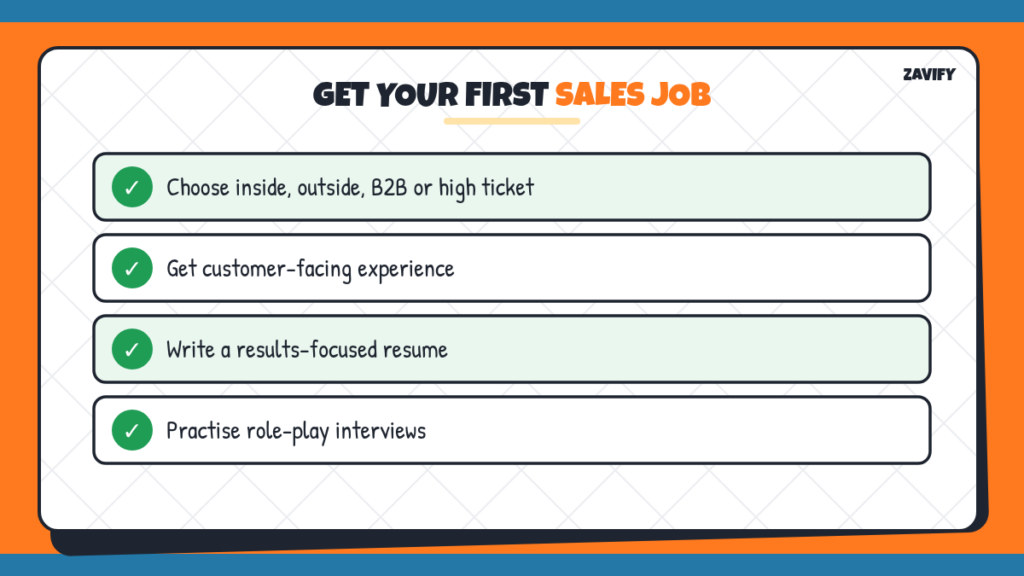
Sales careers come in many shapes, so ask yourself a few questions. Do you prefer working remotely or meeting people in person? Do you want a predictable base salary or higher commission upside? Are you interested in technology, healthcare or another industry? Your answers point you toward inside, outside, B2B or high ticket roles.
2. Learn the Basics of the Sales Process
Understand the main stages: prospecting, qualification, discovery, presentation, handling objections and closing. Knowing this language makes you sound prepared in interviews.
3. Build Communication Skills Now
Join a debate club, give presentations, take a public speaking course or work in a customer-facing part-time job. Every conversation with a stranger builds the confidence sales requires.
4. Get Customer-Facing Experience
Retail, hospitality, call center, campus fundraising and tutoring jobs all count. Employers want proof you can talk to people, handle rejection and meet goals.
5. Learn the Tools
Free introductory courses on CRMs such as HubSpot or Salesforce, plus basic spreadsheet skills, show initiative. You do not need to be an expert; you need to show you can learn quickly.
6. Write a Results-Focused Resume
Use numbers wherever you can: “raised $2,500 for a campus charity,” “handled 60 customers a day,” “increased club membership by 30 percent.” Include your GPA only if it helps; see our guide on whether to put your GPA on your resume.
7. Network on LinkedIn
Connect with SDRs and account executives at companies you like and ask short, polite questions about their work. Salespeople usually respect people who reach out, because that is what they do every day.
8. Prepare for Sales Interviews
Expect role-play exercises, such as “sell me this pen” or a mock discovery call. Practise asking questions before pitching, and prepare stories that show resilience, competitiveness and teamwork.
9. Evaluate Offers Carefully
Compare base salary, OTE, quota attainment, training, benefits and the team’s culture. A slightly lower OTE with great training and a supportive manager is often the better first job.
How Much Do Sales Careers Pay?
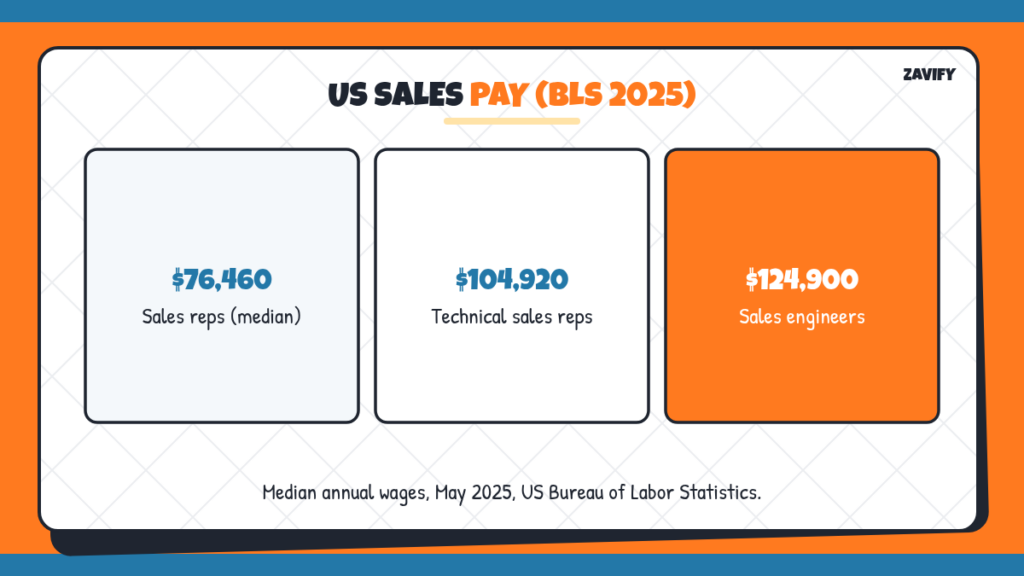
Pay varies widely by role, industry and performance. According to the US Bureau of Labor Statistics, wholesale and manufacturing sales representatives earned a median of $76,460 in May 2025 ($104,920 for technical and scientific products), and sales engineers earned a median of $124,900.
Many salespeople later move into marketing management or sales leadership. The BLS reports a median of $166,790 for marketing managers in May 2025.
Pros and Cons of a Career in Sales
| Pros | Cons |
|---|---|
| Strong earning potential | Income can vary with results |
| Fast feedback and promotion | Quota pressure |
| Transferable skills | Frequent rejection |
| Many industries to choose from | Some roles involve repetitive tasks |
Is a Degree Required for Sales Careers?
Not always. Many retail and entry level sales jobs hire based on attitude and communication skills. However, B2B and technical sales often prefer a bachelor’s degree, and roles like sales engineer usually require a technical degree. Business, communications, economics, engineering and psychology graduates are all common in sales.
How to Get Into Sales With No Experience
If you are wondering how to get into sales without any formal experience, start by reframing what you already have. Leading a student club, organising an event, fundraising for a charity, tutoring classmates or working a busy retail shift all show the qualities sales managers look for: initiative, communication and resilience.
Next, show genuine interest in the company. Research its product, customers and competitors before the interview, and prepare two or three smart questions. Finally, be persistent but polite in your follow-ups. Hiring managers often judge sales candidates by how they handle the hiring process itself, since it mirrors how they would treat a prospect.
Where to Find Entry Level Sales Jobs
Entry level sales jobs are posted on LinkedIn, Indeed and Handshake, as well as on company career pages. Search for titles such as sales development representative, business development representative, inside sales representative, sales associate and account coordinator. Many large companies also run graduate sales programs with structured training, which are excellent for building a foundation in sales careers.
Your college career center is another great resource. Career fairs often include employers actively hiring for sales, and career advisors can help you practise role-play interviews.
Typical Career Path in Sales
A common progression is SDR or BDR for one to two years, account executive for several years, then senior or enterprise account executive. From there, people move into sales management, sales operations, customer success leadership, marketing or entrepreneurship. Strong sales careers are built on consistent results and a reputation for honesty with customers.
Sales Skills That Transfer to Any Career
Even if you do not stay in sales forever, the skills you build will follow you. Learning to listen carefully, ask good questions, explain value clearly and stay calm under pressure helps in management, marketing, consulting, product roles and starting your own business. Many founders say their early sales experience was the most useful job they ever had, because it taught them how customers really make decisions.
That is why sales careers are a smart choice for graduates who are not yet sure where they want to end up. You gain a broad view of how businesses work, meet people across many industries and build a track record measured in clear, visible results.
Common Mistakes When Starting in Sales
Avoid these early mistakes:
- Choosing a job only for the highest OTE.
- Joining commission-only roles with no training.
- Pitching in interviews instead of asking questions.
- Ignoring the industry and product you would sell.
- Giving up after the first difficult month.
Frequently Asked Questions
What are the best sales careers for beginners?
SDR, BDR, inside sales rep and retail sales associate roles are common starting points with training and a base salary.
How do I get into sales with no experience?
Highlight customer-facing jobs, communication skills and goal-driven achievements, learn the sales process and apply for entry-level roles.
Are sales careers well paid?
Many are. Pay often combines salary and commission, and strong performers can earn well above the median.
What skills do I need for sales?
Listening, communication, resilience, organisation and curiosity about customers’ problems.
Is sales a good career for introverts?
Yes. Many top salespeople are good listeners who prepare carefully, which suits introverts well.
Can I move from sales into marketing?
Yes. Sales experience is valuable for marketing roles, and many marketing managers start in sales.
Conclusion
Sales careers offer strong pay, clear progression and skills you can use anywhere in business. Start by choosing the type of selling that suits you, build communication skills and gain customer-facing experience.
Then explore each role in depth with our guides to inside sales, outside sales, B2B sales, high ticket sales and OTE meaning.