Introduction
Not long ago, most salespeople spent their days driving from one customer meeting to the next. Today, a huge share of selling happens from a desk, through phone calls, emails and video meetings. That remote style of selling is now one of the most common entry points into a sales career in the US.
This guide explains what inside sales means, what a typical day looks like, how it compares with outside sales and nine easy steps to succeed if you are starting your first sales job.
- Inside sales = selling remotely, not face to face.
- Common roles: SDR, BDR, inside sales rep, account executive.
- Popular with software, tech and service companies.
Table of Contents
What Is Inside Sales?
Inside sales is selling products or services remotely, using phone calls, email, video meetings, LinkedIn and other online tools, rather than meeting buyers in person. These reps usually work from an office or from home and can talk to many more prospects in a day than a rep who travels.
The term “inside” simply means the salesperson stays inside, as opposed to going out into the field. It does not mean the job is easy or junior; many remote reps close large deals entirely over video calls.
- Channels: phone, email, video, social media, live chat.
- Common industries: software, telecoms, financial services, education, B2B services.
- Typical workplace: office or remote.
How Does Inside Sales Work?
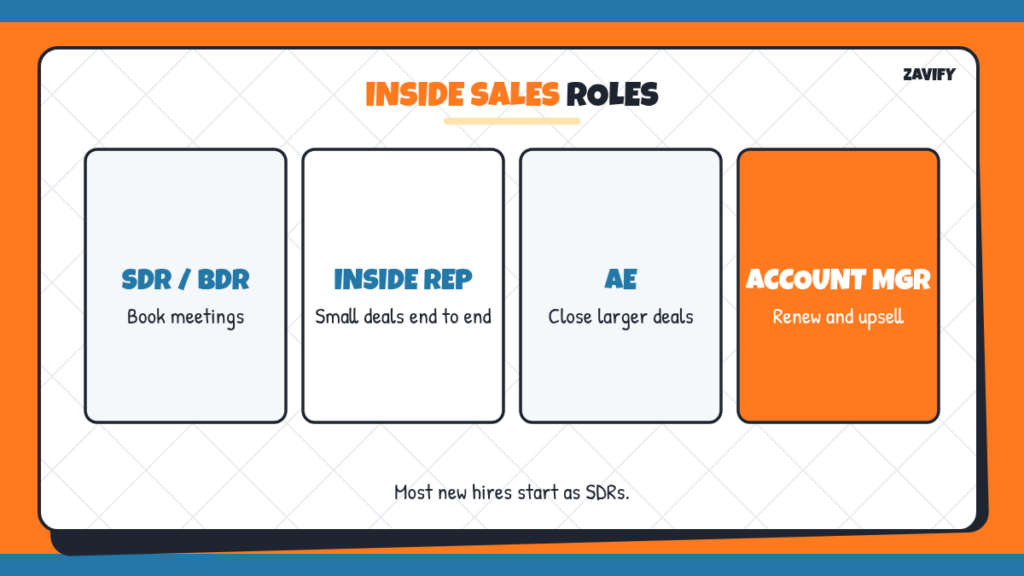
Many remote sales teams split the work into specialised roles, so each person can focus on one part of the process:
| Role | Main Job | Measured On |
|---|---|---|
| SDR / BDR | Find and qualify new leads, book meetings | Calls, emails, meetings booked |
| Inside sales rep | Handle inbound leads and smaller deals end to end | Deals closed, revenue |
| Account executive | Run demos and close larger deals | Revenue against quota |
| Account manager | Grow and renew existing customers | Renewals, upsells |
New hires often start as sales development representatives (SDRs), learning to research companies and start conversations, then move into closing roles once they have proven themselves.
1. Learn the Product Thoroughly
You cannot have useful conversations if you do not understand what you sell. Spend your first weeks learning the product, the problems it solves and the types of customers who buy it.
2. Know Your Ideal Customer
Learn which industries, company sizes and job titles get the most value from your product. Focusing on the right people makes every call and email more effective.
3. Build a Daily Routine
Remote selling rewards consistency. Block time for prospecting, calls, follow-ups and admin each day. Many reps make most of their calls in the morning, when buyers are more likely to answer.
4. Write Short, Personal Emails
Generic templates get ignored. Mention something specific about the company or the person, focus on a problem they likely have and ask one clear question.
5. Get Comfortable on the Phone
Calls still convert better than most channels. Prepare a short opening, practise it out loud and focus on asking questions rather than reading a script.
6. Master Video Meetings
Use a good microphone, look at the camera, share only what is needed and keep demos focused. Small details like good lighting and a tidy background build trust quickly.
7. Keep Your CRM Accurate
Your CRM is your memory. Log every call, email and next step. Managers rely on it to forecast revenue, and accurate records help you follow up at the right time.
8. Track Your Activity and Results
Know your numbers: calls made, conversations held, meetings booked and deals closed. Tracking them weekly shows where to improve, for example more calls or better follow-up.
9. Ask for Coaching
Many teams record calls. Ask your manager or a top performer to review a few of yours and suggest one improvement at a time. Small changes add up fast.
Inside Sales vs Outside Sales
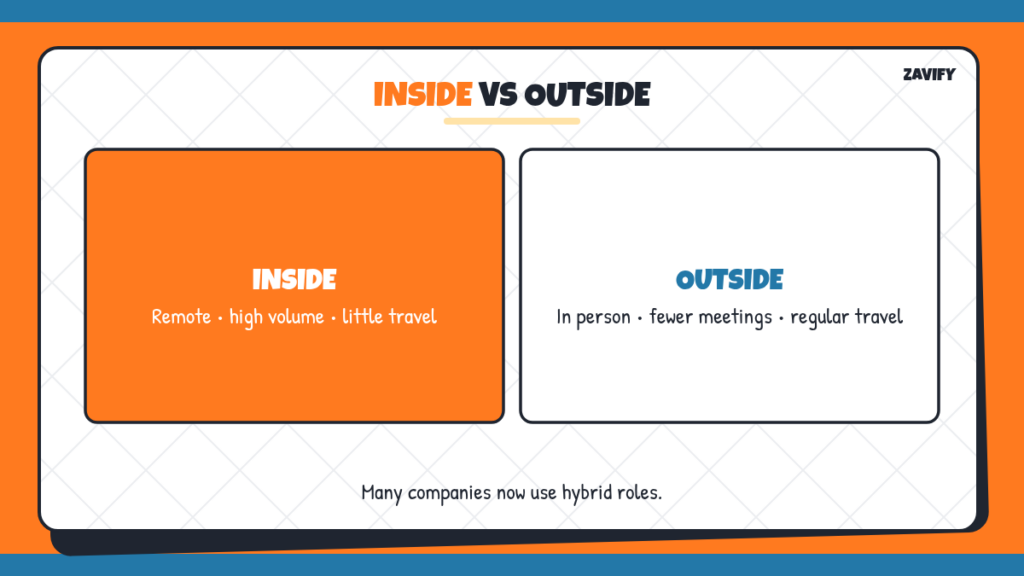
The two styles aim for the same result but work very differently. Here is a quick comparison of inside sales vs outside sales:
| Feature | Inside Sales | Outside Sales |
|---|---|---|
| Where you sell | Remotely (phone, email, video) | In person, in the field |
| Travel | Little or none | Regular travel |
| Daily volume | Many conversations | Fewer, longer meetings |
| Typical deal size | Small to large | Often large or relationship-based |
| Common industries | Software, services, tech | Medical devices, industrial, wholesale |
Many companies now use a hybrid model, with reps who work mostly remotely but travel for key meetings. Read our full guide to outside sales to compare the roles in detail.
How Much Do Inside Sales Reps Earn?
Pay in these roles usually combines a base salary with commission or bonus, often described as OTE (on-target earnings). Entry-level SDR roles typically have a higher base share, while closing roles carry more commission. For context, the US Bureau of Labor Statistics reports a median annual wage of $76,460 for wholesale and manufacturing sales representatives (May 2025), and notes that most employers pay a combination of salary and commission or bonuses.
Skills You Need for the Role
The most useful skills are clear writing, confident phone communication, active listening, organisation and resilience. You will hear “no” often, so the ability to stay positive and learn from each conversation matters a lot. Basic comfort with technology also helps, since you will use a CRM and several online tools every day.
A Typical Day for a Remote Sales Rep
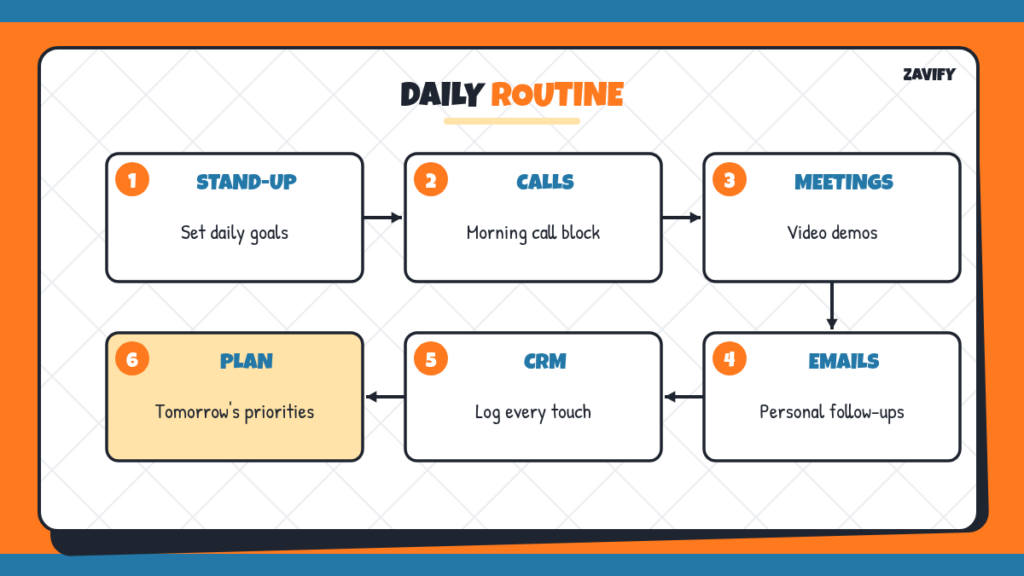
A common day starts around 8:30 with a quick team stand-up where reps share goals and wins from the day before. The morning is usually protected for calls, because buyers are easier to reach early. Late morning might include two or three scheduled video meetings with prospects. After lunch, reps send follow-up emails, research new companies and add notes to the CRM. The afternoon often ends with another short block of calls and a review of tomorrow’s priorities.
Some days feel repetitive, but each conversation is different. Many reps say the variety of people they speak to, from small business owners to senior executives, is the best part of the job.
Tools You Will Use Every Day
Most teams rely on a CRM such as Salesforce or HubSpot to store contacts and deals, a dialer that makes calling faster, an email sequencing tool that schedules follow-ups, LinkedIn Sales Navigator for research and Zoom or Microsoft Teams for meetings. Many also use call recording software so managers can coach reps. You will be trained on these, so focus on learning quickly once you join.
Is Inside Sales a Good First Job?
For many graduates, yes. It offers structured training, clear performance metrics, fast feedback and a visible path to promotion. The skills you build, such as communication, persuasion and resilience, transfer to almost any business career, including marketing, management and entrepreneurship.
It is not for everyone, though. The work can feel repetitive, and quotas create pressure. If you enjoy people, like measurable goals and do not mind rejection, it is worth trying. Our sales careers guide covers the wider path.
Career Path and Promotions
A common path is SDR for 12 to 18 months, then account executive, then senior account executive or team lead. Some people move into sales management, sales operations, customer success or marketing. Because results are measured clearly, strong performers can often move up faster than in many other entry-level jobs.
Common Mistakes in Inside Sales
New reps often make these mistakes:
- Sending the same generic email to everyone.
- Avoiding phone calls and relying only on email.
- Talking too much on calls and not asking questions.
- Not updating the CRM after each conversation.
- Giving up on leads after one or two attempts.
Frequently Asked Questions
What is inside sales?
Inside sales is selling remotely through phone, email and video rather than meeting customers in person.
What does an inside sales rep do?
They research prospects, make calls, send emails, run online meetings, update the CRM and move deals forward to close.
What is the difference between inside sales vs outside sales?
Inside sales is remote and high-volume; outside sales involves meeting customers in person and often travelling.
Is inside sales a remote job?
Often, yes. Many inside sales roles are fully remote or hybrid, though some companies prefer office-based teams.
Do inside sales reps get commission?
Most do. Pay usually combines a base salary with commission or bonuses tied to results.
Do I need a degree for inside sales?
Many employers prefer one, but strong communication skills and a positive attitude can matter just as much for entry-level roles.
Conclusion
Inside sales means selling remotely, using phone, email and video. It is fast-paced, measurable and one of the best ways to start a sales career.
Learn the product, build a daily routine and track your numbers. Ask for feedback early, be patient with yourself in the first few months and celebrate small wins like your first booked meeting. Every top performer started exactly where you are. To explore related roles, read our guides to B2B sales and high ticket sales.