Introduction
Some people love the idea of working from a desk all day. Others would much rather be out meeting people, visiting businesses and building relationships face to face. If you are in the second group, field sales might be the right fit.
This guide explains what outside sales means, what an outside sales representative does day to day, how pay and travel work, and nine easy steps to build a successful field sales career.
- Outside sales = selling in person, in the field.
- Reps usually manage a territory or a list of accounts.
- Common in medical, industrial, wholesale and B2B services.
Table of Contents
What Is Outside Sales?
It means selling products or services by meeting customers in person, usually at their offices, stores, hospitals, job sites or homes. An outside sales representative typically manages a geographic territory or a set of accounts and travels to see them.
It is sometimes called field sales. The name contrasts with inside sales, where reps sell remotely. In practice, field reps also use phone and email a lot, but in-person meetings are central to the job.
- Common industries: medical devices, pharmaceuticals, industrial equipment, building materials, food and beverage, wholesale.
- Typical buyers: business owners, managers, purchasing teams, doctors and clinic staff.
- Work style: driving or flying to meetings, demos and trade shows.
How Does Outside Sales Work?
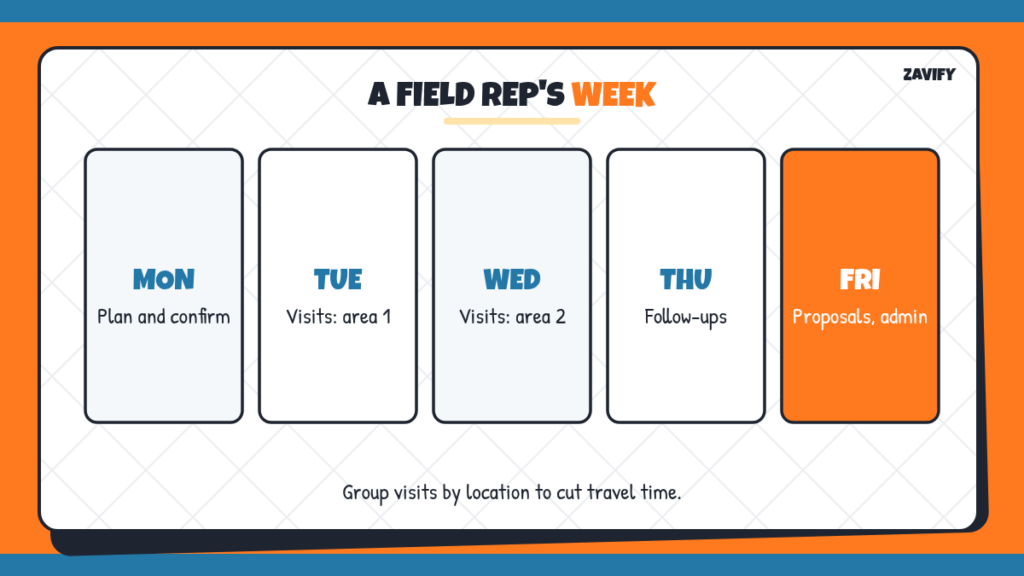
Field work revolves around planning. A typical week might look like this:
| Day | Main Activity |
|---|---|
| Monday | Plan visits, confirm meetings, update CRM |
| Tuesday | Visit customers in one part of the territory |
| Wednesday | Visit customers in another area, run demos |
| Thursday | Follow-up meetings, new prospect visits |
| Friday | Proposals, admin, calls and next week’s plan |
Good field reps group meetings by location to cut travel time and make sure every trip combines visits to existing customers with time for new prospects.
1. Learn Your Product and Industry
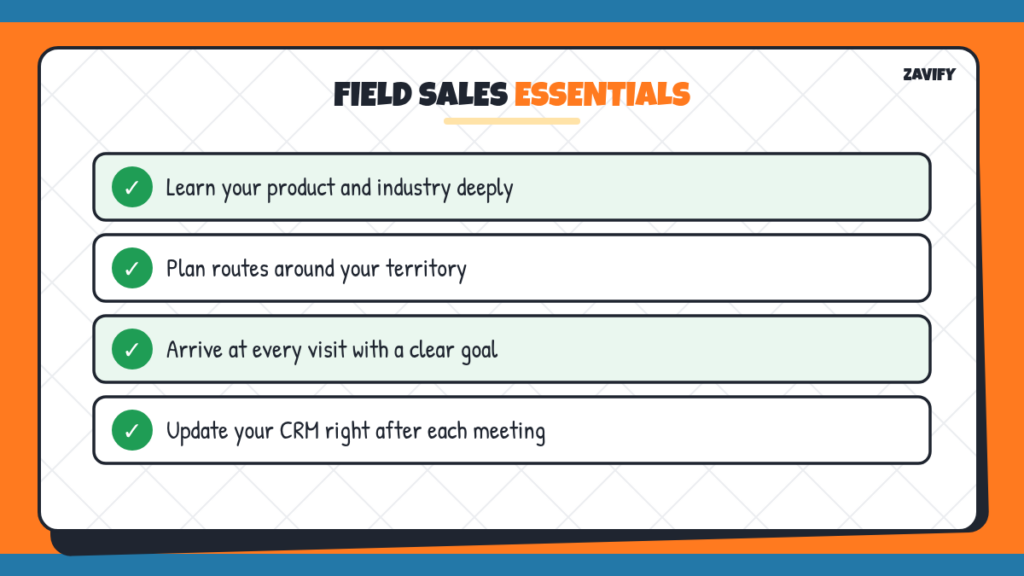
Buyers in these industries often know their field well, so you need to understand the product, its competitors and the customer’s world. In medical sales, for example, that means learning how clinics work and what matters to doctors and staff.
2. Understand Your Territory
Map your existing customers, key prospects and competitors in your area. Knowing where opportunities are concentrated helps you plan efficient routes and spend time where it counts.
3. Plan Your Week Around Geography
Group visits by area to reduce driving. Confirm meetings a day ahead and leave buffer time for traffic and longer-than-expected conversations.
4. Prepare for Every Visit
Review notes, recent orders and any open issues before each meeting. Arrive with a clear goal, such as introducing a new product or agreeing on a trial.
5. Build Real Relationships
Field selling is built on trust. Remember names, follow through on promises and solve problems even when there is no immediate sale. Loyal customers often refer you to others.
6. Use Your CRM on the Go
Update the CRM from your phone straight after each meeting while details are fresh. Accurate records help you follow up and help your manager forecast sales.
7. Combine In-Person and Remote Selling
Not every conversation needs a visit. Use calls and video for quick check-ins and save in-person time for important meetings, demos and new relationships. For in-person client meetings, a visitor management system can simplify guest check-ins and notify employees when their visitors arrive.
8. Track Your Results
Measure visits, meetings with decision-makers, proposals sent and deals closed. Comparing these numbers each month shows which activities lead to sales.
9. Look After Yourself on the Road
Long drives and busy schedules can be tiring. Plan healthy meals, keep a regular sleep schedule and manage your energy. Consistency over months matters more than one busy week.
Outside Sales vs Inside Sales
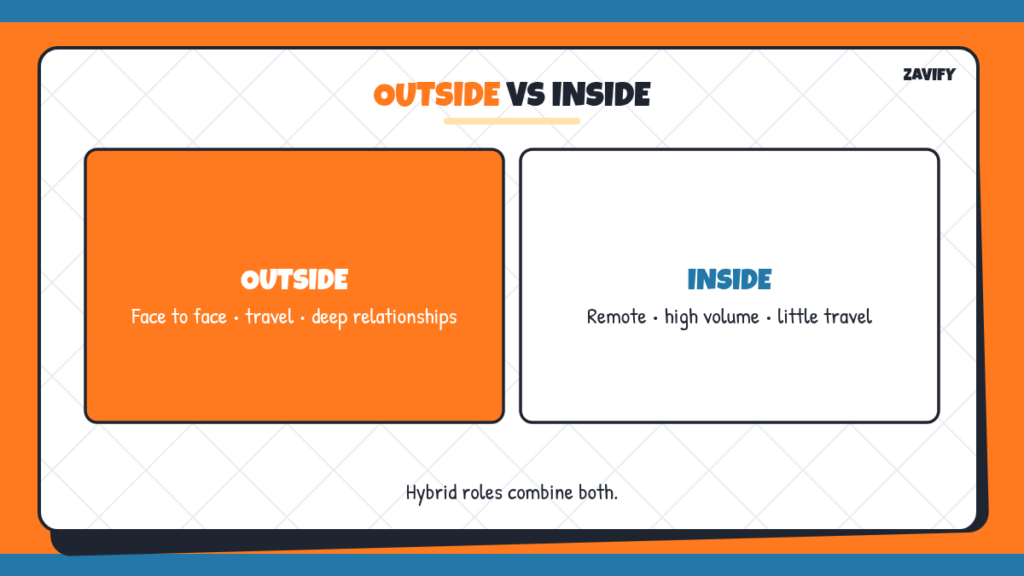
Here is how the two roles compare:
| Feature | Outside Sales | Inside Sales |
|---|---|---|
| Selling style | Face to face | Remote |
| Travel | Regular | Little or none |
| Number of conversations | Fewer, deeper meetings | Many shorter conversations |
| Relationship length | Often long-term accounts | Varies |
| Typical extras | Car or mileage allowance | Remote work flexibility |
Many companies now use hybrid roles that combine both. If you enjoy variety and people, field work offers a lot of independence.
How Much Do Outside Sales Representatives Earn?
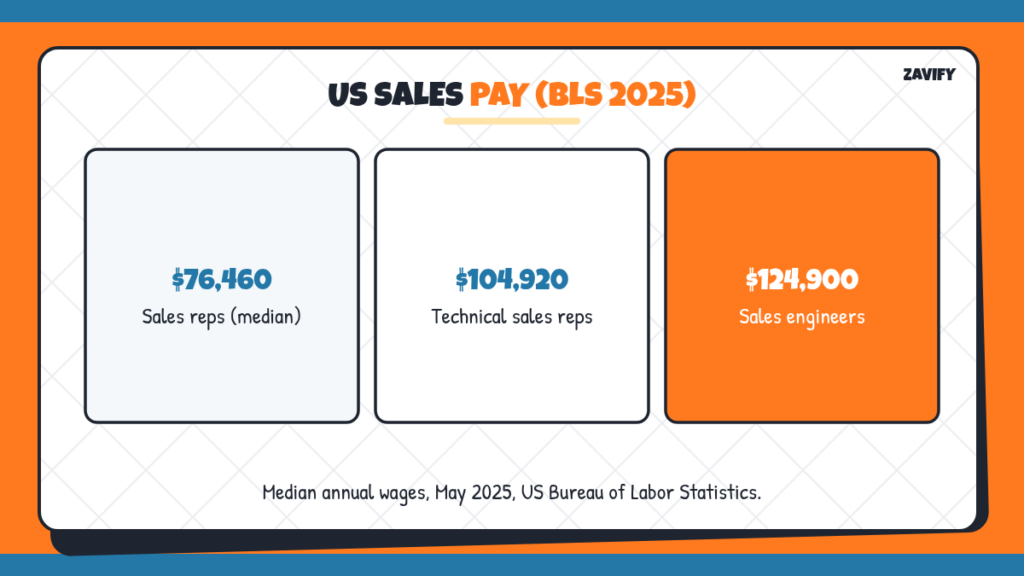
Pay usually combines a base salary with commission or bonus, described as OTE. According to the US Bureau of Labor Statistics, wholesale and manufacturing sales representatives earned a median of $76,460 in May 2025, rising to $104,920 for those selling technical and scientific products. Technical roles such as sales engineers earned a median of $124,900.
Field roles often include a company car, car allowance or mileage reimbursement, plus travel expenses. Always ask how these work, because they can add significant value to the package.
Skills You Need in the Field
The key skills are relationship building, time management, product knowledge, presentation skills and independence. You will spend a lot of time working without a manager nearby, so self-discipline is essential. A clean driving record is also required for many roles.
Pros and Cons of Field Selling
The biggest advantages are independence, variety and the satisfaction of building long-term relationships. You are rarely stuck at a desk, and strong performers often earn well, especially in technical industries. Many people also enjoy the chance to see different businesses and meet a wide range of people.
The downsides are time on the road, irregular hours when meetings run late and the pressure of a territory target. Bad weather, traffic and cancellations can disrupt carefully planned days. It suits organised people who stay motivated without a manager watching over them.
Industries That Hire Field Reps
Medical device and pharmaceutical companies hire reps to visit hospitals and clinics. Industrial and building supply companies send reps to factories and construction sites. Food and beverage brands visit stores and restaurants. Office equipment, security and energy companies visit businesses of all sizes. Each industry has its own rhythm: medical sales often involves technical training and procedure support, while consumer goods focuses on store placement and promotions. Choose an industry that genuinely interests you, because you will talk about it every day.
How to Get Your First Outside Sales Job
Many field reps start in remote sales or customer service to learn the product and the customers, then move into a territory. Others join through graduate programs at medical, industrial or consumer goods companies. Highlight any experience with customers, presentations or independent work, and show that you understand the industry. Our sales careers guide covers the full path.
Career Path in Field Sales
Many reps start with a smaller territory or a junior “associate” role, often shadowing a senior rep for several months. With strong results, they take on a larger territory, bigger accounts or a key account role managing major customers. From there, common next steps include regional sales manager, national accounts manager or moving into sales training, product marketing or business development.
Experience in the field is also valued outside sales. People who understand customers deeply often move into product management, operations or even start their own businesses in the same industry.
How Technology Is Changing the Role
Field reps today rely heavily on technology: mobile CRM apps, route planning tools, video calls for quick check-ins and tablets for demos. Many companies now expect a mix of in-person and remote contact, so comfort with both is a real advantage when you apply.
Common Mistakes in Outside Sales
New field reps often make these mistakes:
- Driving across the territory without a plan.
- Only visiting friendly existing customers.
- Arriving at meetings without a clear goal.
- Leaving CRM updates until the end of the week.
- Neglecting phone and email follow-up between visits.
Frequently Asked Questions
What is outside sales?
Outside sales is selling in person, usually by visiting customers within a territory rather than selling remotely.
What does an outside sales representative do?
They plan visits, meet customers, run demos, build relationships, manage a territory and close sales.
Is outside sales a good job?
For people who enjoy independence, travel and relationships, it can be very rewarding and well paid.
Do outside sales reps get a company car?
Many do, or they receive a car allowance or mileage reimbursement. It depends on the employer.
How much travel is involved in outside sales?
It varies. Some roles involve daily local driving; others include regular overnight travel across a large region.
Is outside sales harder than inside sales?
It is different rather than harder. Outside sales needs more planning and independence, while inside sales needs high activity and strong phone skills.
Conclusion
Outside sales means meeting customers in person and managing a territory. It offers independence, strong relationships and good earning potential for people who plan well and enjoy face-to-face work.
Learn your industry, plan your week around geography and track your results. Treat every customer visit as a chance to learn something new about their business, and you will build the trust that keeps them buying from you for years. Compare it with inside sales and B2B sales to find the right fit for you.