Introduction
Every business you have ever heard of buys from other businesses: software, office supplies, raw materials, delivery services, legal advice. Someone has to sell all of that, and that is where B2B sales comes in.
B2B sales is one of the largest and best-paid areas of sales in the US, and it is a common first job for business, economics and engineering graduates. This guide explains what it is, how the process works, who does what and nine easy steps to get good at it.
- B2B = business-to-business.
- Deals are larger and take longer than consumer sales.
- Several people usually take part in each buying decision.
Table of Contents
What Is B2B Sales?
B2B sales, short for business-to-business sales, is the process of one company selling products or services to another company rather than to individual consumers. The buyer might be a small local business or a global corporation.
The opposite is B2C, or business-to-consumer, sales, like a store selling shoes to shoppers. B2B purchases are usually bigger, more carefully planned and tied to a business goal such as saving money, growing revenue or reducing risk.
- Examples: software sold to companies, industrial equipment, marketing services, staffing, consulting.
- Buyers: managers, department heads, procurement teams and executives.
- Sellers: SDRs, account executives, account managers and sales engineers.
How Does B2B Sales Work?
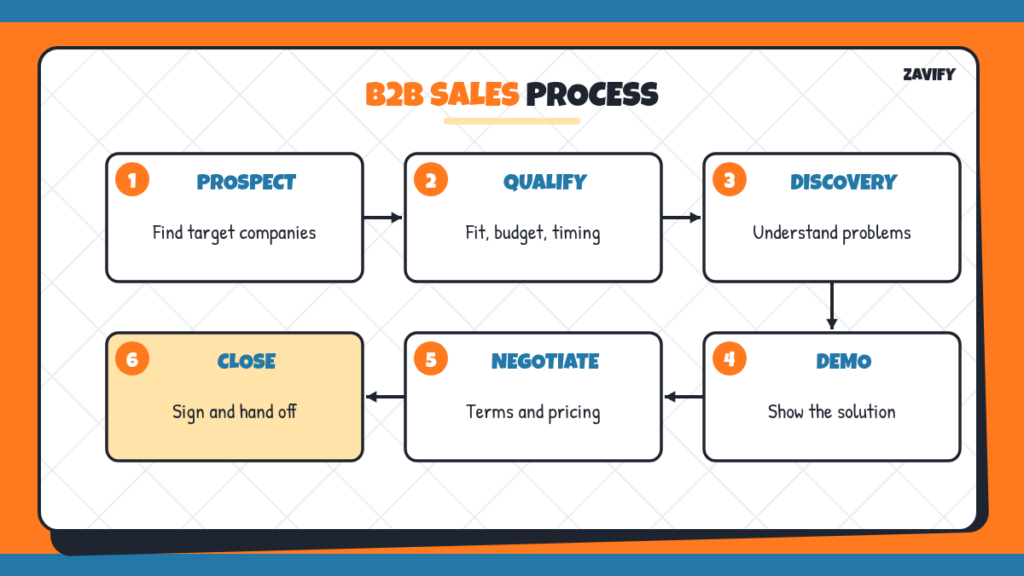
Most B2B sales teams follow a process with clear stages. Names vary from company to company, but the basic flow looks like this:
| Stage | Goal | Typical Activity |
|---|---|---|
| Prospecting | Find companies that might need the product | Research, cold email, LinkedIn, calls |
| Qualification | Check fit, budget and timing | Short discovery call |
| Discovery | Understand problems and goals | In-depth meeting with stakeholders |
| Demo / proposal | Show how the product solves the problem | Presentation, pricing, proposal |
| Negotiation | Agree terms with decision-makers | Legal, procurement, pricing talks |
| Close and handoff | Sign the contract and start onboarding | Signature, kickoff with customer success |
Simple deals might move through these stages in a few weeks. Large enterprise deals can take many months, because more people need to agree and the company may need legal and security reviews.
1. Learn Who Buys and Why
Start by understanding your ideal customer profile: the size, industry and type of company that gets the most value from your product. Then learn who inside those companies cares about the problem you solve, and what they are measured on.
2. Research Before Every Contact
A few minutes of research on the company’s website, recent news and the person’s role makes your outreach far more relevant. Buyers notice immediately when a message was written for them rather than for thousands of people.
3. Write Short, Useful Outreach
Good cold emails are brief, specific and focused on the buyer. Mention a problem they likely have, show you understand it and ask one simple question. Avoid long paragraphs about your own company.
4. Qualify Early
Not every interested company is a good fit. Many teams use simple frameworks such as BANT (budget, authority, need, timeline) to decide whether a lead is worth pursuing. Qualifying early saves time for both sides.
5. Run Strong Discovery Meetings
Discovery is where deals are won. Ask open questions about the buyer’s goals, current process, challenges and what happens if nothing changes. Take notes and confirm what you heard before proposing anything.
6. Map the Buying Committee
Most B2B purchases involve several people: the person who uses the product, their manager, someone from finance and sometimes IT or legal. Learn who each person is, what they care about and who makes the final decision.
7. Tailor Your Demo or Proposal
Show only the parts of the product that solve the problems you uncovered in discovery. A focused 20-minute demo is more convincing than a tour of every feature.
8. Handle Objections With Questions
Common objections include price, timing and “we already have a solution.” Instead of arguing, ask what is behind the concern. Often the real issue is risk, and you can reduce it with a pilot, references or a clear plan.
9. Follow Up and Keep Your CRM Updated
Most B2B deals need several touchpoints. Record every conversation and next step in your CRM, set reminders and follow up consistently. Organised sellers close more deals simply because nothing slips through the cracks.
Popular B2B Sales Methods
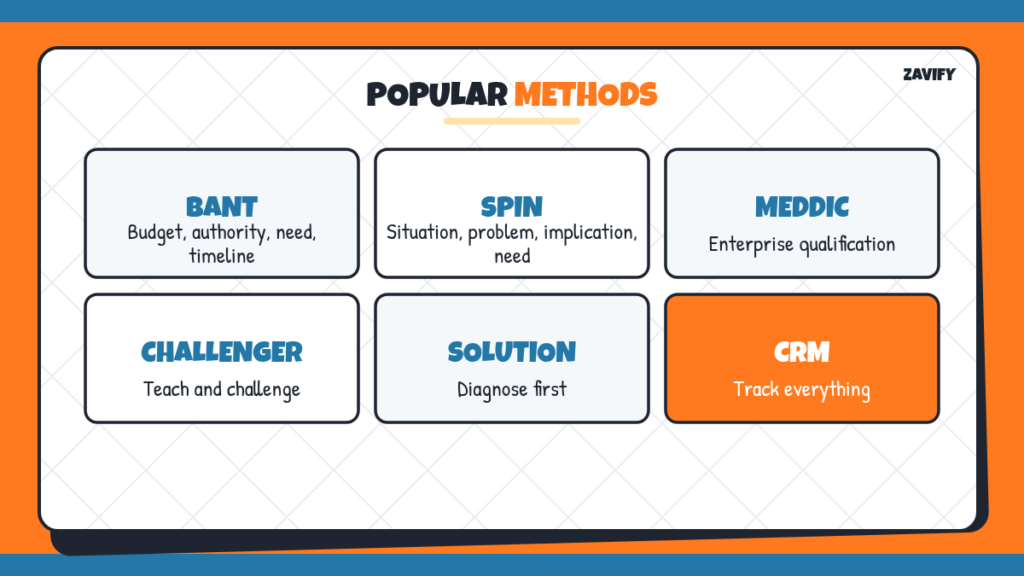
Sales teams often train on named methodologies. You do not need to master all of them, but knowing the basics helps in interviews:
- BANT: qualifies leads by budget, authority, need and timeline.
- SPIN Selling: uses situation, problem, implication and need-payoff questions.
- MEDDIC: a detailed qualification method used in complex enterprise deals.
- Challenger Sale: teaches buyers something new about their business and challenges their thinking.
- Solution selling: focuses on diagnosing problems before recommending a product.
Common B2B Sales Roles
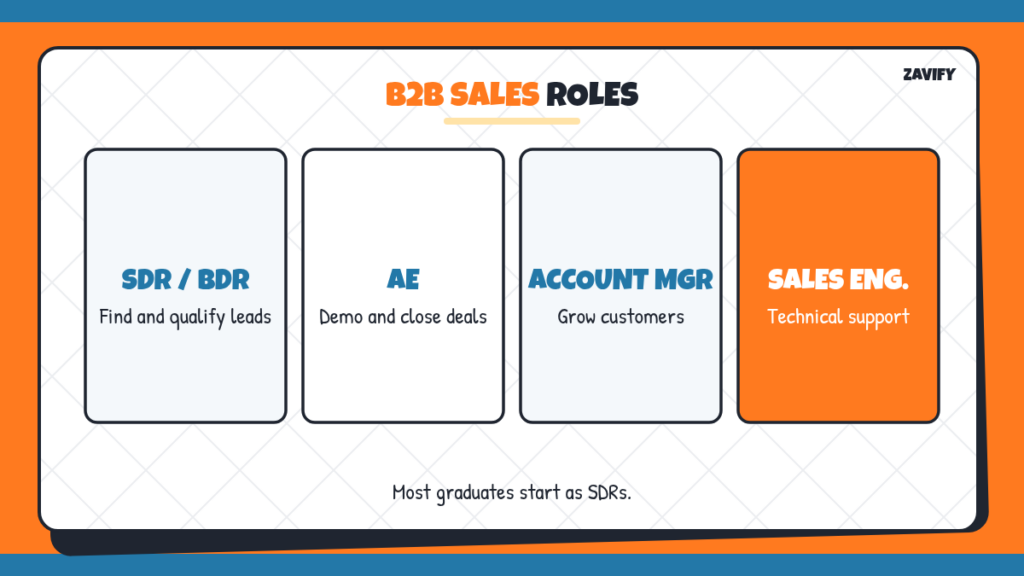
B2B sales teams are usually split into specialised roles. Sales development representatives (SDRs) or business development representatives (BDRs) find and qualify new leads. Account executives (AEs) run discovery, demos and negotiations to close deals. Account managers look after existing customers and grow those relationships. Sales engineers support complex deals with technical expertise.
Most new graduates start as SDRs and move to account executive within one to two years. Many B2B roles today are inside sales positions, while others involve travel as outside sales.
How Much Do B2B Salespeople Earn?
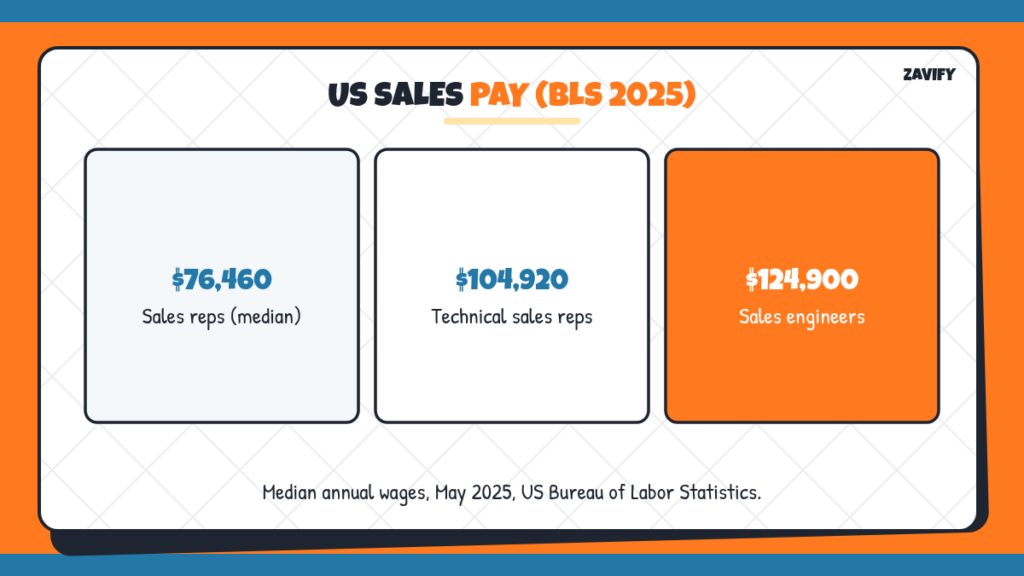
Pay usually combines a base salary with commission, described as OTE (on-target earnings). According to the US Bureau of Labor Statistics, wholesale and manufacturing sales representatives earned a median of $76,460 in May 2025, and those selling technical and scientific products earned $104,920.
B2B vs B2C Sales
| Feature | B2B Sales | B2C Sales |
|---|---|---|
| Buyer | A business | An individual |
| Deal size | Usually larger | Usually smaller |
| Sales cycle | Weeks to months | Minutes to days |
| Decision-makers | Several people | One person or household |
| Main driver | Business value and ROI | Personal need and emotion |
Tools Every Seller Uses
You do not need to know every tool before your first job, but recognising the main types helps. A CRM such as Salesforce or HubSpot stores every contact, deal and conversation. Sales engagement tools schedule email and call sequences. LinkedIn Sales Navigator helps you research companies and people. Video tools like Zoom handle demos, and call recording tools let teams review conversations and coach each other.
Employers train new hires on their own setup, so focus on understanding why each tool exists rather than memorising features.
Skills You Already Have From College
Students often think they have nothing to offer a sales team. In reality, many college experiences build exactly the right skills. Presentations teach you to explain ideas clearly. Group projects teach you to work with people who have different goals, much like a buying committee. Research papers teach you to find and summarise information quickly. Part-time jobs in retail or hospitality teach you to stay calm with difficult customers.
In interviews, use real examples from these experiences. A short story about persuading a group to change its plan, or turning around an unhappy customer, is often more convincing than a perfect GPA. If you are wondering how much grades matter, read our guide on whether GPA matters for jobs.
A Simple Example of a B2B Deal
Imagine a company that sells scheduling software to dental clinics. An SDR researches clinics with several locations, sends a short email about missed appointments and books a call with an office manager. The account executive then runs a discovery meeting, learns that no-shows cost the clinic thousands each month, and gives a demo focused on automatic reminders. The clinic owner and an IT contact join a second meeting, the clinic tries a one-month pilot, and the contract is signed. From first email to signature, the process takes about six weeks.
Common Mistakes in B2B Sales
These mistakes slow down deals and cost commissions:
- Sending generic outreach to large lists.
- Pitching before understanding the problem.
- Talking only to one contact in the buying committee.
- Giving long demos that show every feature.
- Letting deals stall without a clear next step.
Frequently Asked Questions
What is B2B sales?
It is the process of one business selling products or services to another business rather than to individual consumers.
What are the stages of the B2B sales process?
Common stages are prospecting, qualification, discovery, demo or proposal, negotiation and closing.
Is B2B sales a good career?
For many people, yes. It offers clear career paths, strong earning potential and skills that transfer to management and entrepreneurship.
Do I need a degree for B2B sales?
Many employers prefer a bachelor’s degree, especially for technical products, but skills and attitude often matter as much.
What is the difference between an SDR and an AE?
An SDR finds and qualifies new leads; an AE runs the sales process and closes deals.
How long is a typical B2B sales cycle?
It ranges from a few weeks for simple products to many months for large enterprise deals.
Conclusion
B2B sales is the process of selling to other businesses. It involves larger deals, longer cycles and several decision-makers, which makes listening, research and organisation the most valuable skills.
Learn the process, practise discovery and follow up consistently. To plan your next step, read our sales careers guide and our explainer on high ticket sales.