Introduction
Scroll through social media for a few minutes and you will probably see someone claiming they earn thousands of dollars a week “closing” high ticket offers from their laptop. Some of those stories are real. Many are exaggerated, and some are sales pitches for expensive courses.
So what is high ticket sales, really? This guide explains it honestly: what it means, where the real jobs are, what the pay structure looks like, which skills matter and nine easy steps to get started without falling for hype.
- High ticket = products or services with a high price.
- Sales are consultative and often take several conversations.
- Pay is usually commission-heavy, so results matter.
Table of Contents
What Is High Ticket Sales?
High ticket sales is the process of selling products or services with a high price, often thousands or even tens of thousands of dollars per sale. Because the buyer is making a big decision, these sales rely on trust, careful questions and clear explanations rather than quick impulse purchases.
There is no official price that makes something “high ticket.” For a consumer, a $3,000 coaching program is high ticket. For a business, it might be a $50,000 software contract. What they share is a long, thoughtful buying process.
- Consumer examples: coaching programs, home solar, cars, luxury goods, financial planning.
- Business examples: software, equipment, consulting, marketing services.
- Common job titles: closer, account executive, sales consultant.
How Does High Ticket Sales Work?
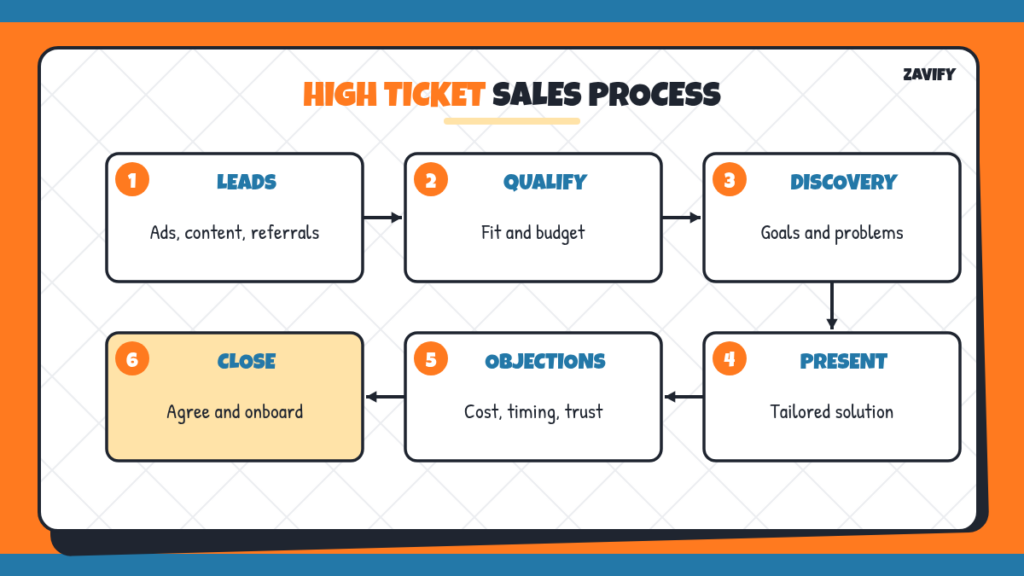
Most high ticket sales follow a similar path, whether the buyer is a person or a company:
| Stage | What Happens | Who Usually Does It |
|---|---|---|
| Lead generation | Ads, content or referrals attract interest | Marketing team |
| Qualification | A short call checks fit and budget | Setter or SDR |
| Discovery | Deep questions about goals and problems | Closer or account executive |
| Presentation | A tailored solution and price | Closer |
| Objections | Concerns about cost, timing or trust | Closer |
| Close and onboarding | Agreement, payment and handover | Closer and support team |
Unlike low-priced sales, the closer’s job is less about persuasion and more about diagnosis: understanding the buyer’s situation well enough to show whether the offer genuinely helps.
1. Understand the Difference Between Real Jobs and Hype
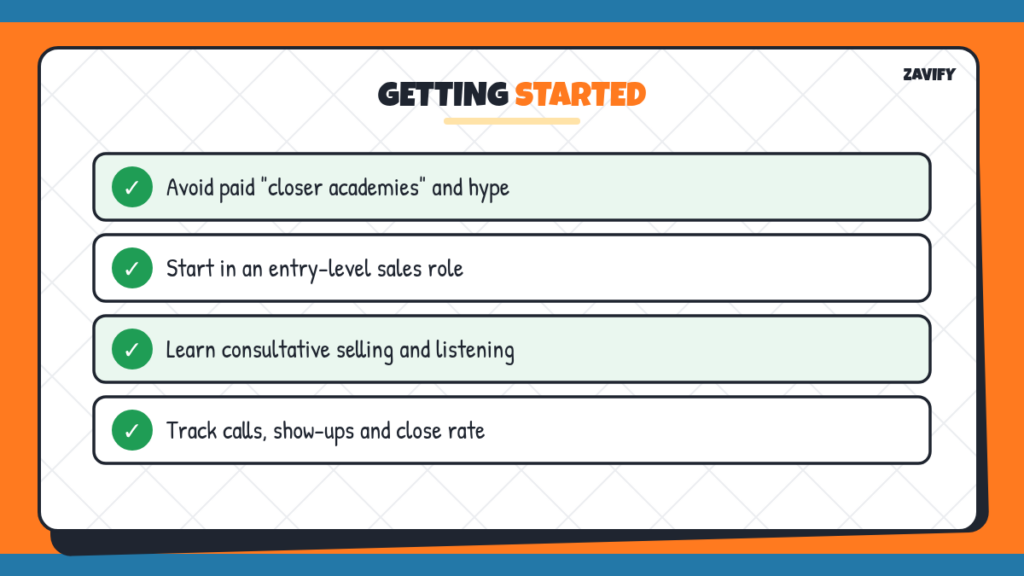
Real high ticket sales jobs exist at software companies, solar installers, car dealerships, financial firms and established coaching businesses. Be cautious of programs that charge you thousands to “become a closer” and promise easy remote income. A legitimate employer pays you to learn, not the other way around.
2. Learn the Basics of Consultative Selling
Consultative selling means asking questions first and recommending second. Learn simple frameworks such as asking about the buyer’s current situation, their goals, what is in the way and what happens if nothing changes. These ideas appear in almost every sales training program.
3. Build Strong Listening Skills
Top closers talk less than you might think. They listen carefully, take notes and repeat back what they heard. Practise this in everyday conversations, and you will notice the difference in how people respond.
4. Learn to Handle Objections
“It’s too expensive,” “I need to think about it” and “I need to ask my partner” are the most common objections. Each one usually hides a real concern. Learn to ask a calm follow-up question instead of pushing harder.
5. Pick an Industry You Understand
Selling something you understand is far easier and more honest. If you studied finance, look at financial services. If you love technology, look at software. Industry knowledge also helps you build credibility faster.
6. Start With an Entry-Level Sales Role
Many successful closers began as setters, SDRs or retail sales associates. These roles teach you to handle rejection, manage a pipeline and talk to strangers with confidence, all while earning a base salary.
7. Understand the Pay Structure
High ticket roles are usually commission-heavy. Some include a base salary; others, especially remote closer roles for coaching businesses, are commission-only. Read our guide to OTE meaning to understand base, commission and quota before you accept anything.
8. Use a CRM and Track Your Numbers
Track calls, show-up rates, close rates and average deal size in a CRM or spreadsheet. Your numbers tell you exactly which part of your process needs work.
9. Keep Ethics at the Center
Because prices are high, pressure tactics can do real damage to buyers. Only sell to people the offer can genuinely help, be honest about price and results, and respect a “no.” Ethical sellers keep their reputation, earn referrals and last longer in the industry.
How Much Do High Ticket Closers Earn?
Earnings vary enormously, which is exactly why you should be skeptical of social media screenshots. Commission rates of around 10 to 20 percent of each sale are often quoted for closer roles in coaching and online education, but your actual income depends on how many qualified calls you get, your close rate and how much the offer costs.
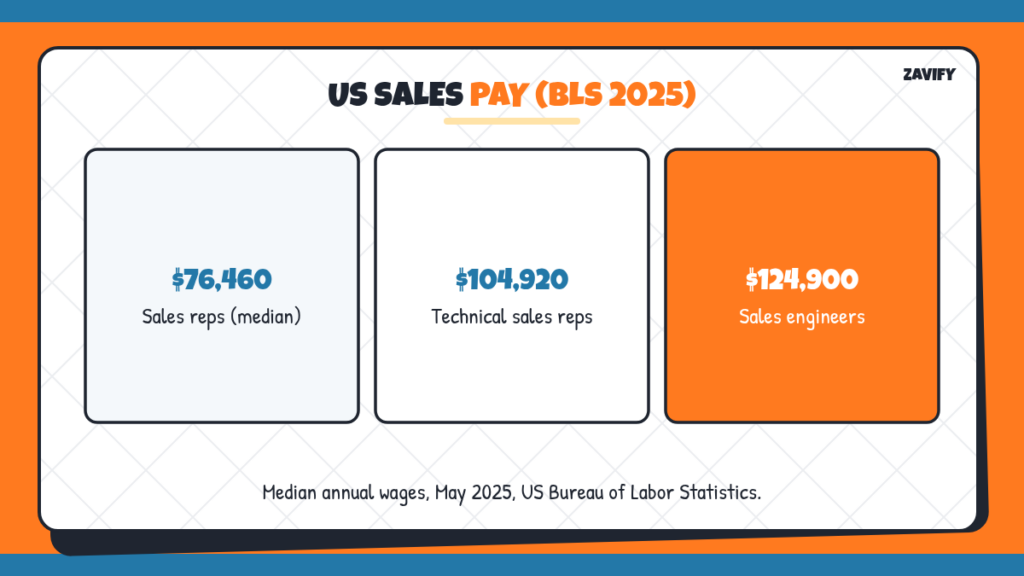
For a grounded benchmark, the US Bureau of Labor Statistics reports a median annual wage of $76,460 for wholesale and manufacturing sales representatives (May 2025), with $104,920 for those selling technical and scientific products. Most employers in these fields pay a mix of salary and commission or bonus.
High Ticket Sales vs Low Ticket Sales
Low ticket sales involve cheaper products that people buy quickly, often online with no conversation at all. High ticket sales involve fewer, larger deals and more human contact. The table below shows the main differences.
| Feature | Low Ticket | High Ticket |
|---|---|---|
| Price | Low (often under $100) | High (often $1,000+) |
| Sales cycle | Minutes or days | Days, weeks or months |
| Human contact | Little or none | Calls, demos, meetings |
| Number of deals | Many | Fewer |
| Key skill | Marketing and volume | Trust and consultation |
Skills That Matter Most
The most valuable skills are active listening, clear communication, resilience after rejection, organisation and basic business understanding. Many of these are the same skills you build in college through presentations, group projects and part-time jobs, so do not underestimate your experience.
Red Flags to Avoid
Watch out for “closer academies” that charge large upfront fees, guaranteed income claims, roles where you sell a product you would not buy yourself, and companies that cannot explain where their leads come from. A good opportunity is transparent about pay, leads and expectations.
A Day in the Life of a High Ticket Closer
A typical day starts with reviewing the calendar and reading notes on each prospect before the first call. Most of the day is spent on scheduled video or phone calls, usually 45 to 60 minutes each, with breaks to update the CRM and send follow-up emails. Closers often meet with their manager or team to review recorded calls, discuss objections and share what is working.
It is not glamorous. Some days bring three sales in a row; others bring no-shows and polite refusals. The people who succeed treat every call as a chance to learn, keep detailed notes and stay consistent even when results are slow.
Is High Ticket Sales Right for You?
It suits people who enjoy conversations, stay calm under pressure and are motivated by results. If you need a fully predictable income right now, choose a role with a solid base salary first and move toward commission-heavy work once you have proven your skills. There is no rush; the best closers usually build their skills over several years.
Common Mistakes in High Ticket Sales
New closers often make these mistakes:
- Talking more than listening on discovery calls.
- Pushing for a close before understanding the problem.
- Paying for expensive courses before getting real experience.
- Ignoring their own numbers and close rate.
- Selling to people the offer cannot really help.
Frequently Asked Questions
What is high ticket sales?
It is the process of selling expensive products or services, usually through consultative conversations over several calls or meetings.
What does a high ticket closer do?
A high ticket closer runs sales calls with qualified buyers, asks discovery questions, presents the offer, handles objections and closes the sale.
Is high ticket sales legit?
Yes, many real companies hire for it. But be cautious of programs that charge you to become a closer or promise guaranteed income.
Do I need a degree for high ticket sales?
Not always. Many roles focus on skills and results, though technical and B2B sales jobs often prefer a bachelor’s degree.
Is high ticket sales commission only?
Some roles are, especially remote closer jobs. Others, such as B2B software sales, usually include a base salary plus commission.
How do I get my first high ticket sales job?
Start with an entry-level sales role, learn consultative selling, track your results and then apply for closer or account executive positions.
Conclusion
High ticket sales means selling expensive products or services through trust and careful conversation. It can be a rewarding career, but income depends on results and the field attracts plenty of hype.
Start with a real entry-level role, learn consultative selling and keep ethics front and center. For the bigger picture, read our sales careers guide and our explainer on B2B sales.