Introduction
For millions of Americans, the first real job is on a shop floor: greeting customers, answering questions and ringing up purchases. The title is usually sales associate, and it is one of the most common jobs in the country.
It is also more valuable than many people realise. The skills you learn as a sales associate (talking to strangers, solving problems, handling pressure) are the same skills employers look for in sales, customer service and management roles. This guide explains the job, the pay, the skills and nine easy steps to do it well.
- Sales associates help customers find and buy products.
- US median pay for retail salespersons: $17.03 per hour (BLS, May 2025).
- Usually no formal education required; training is on the job.
Table of Contents
What Does a Sales Associate Do?
A sales associate works in a store or showroom, helping customers choose products and completing their purchases. According to the US Bureau of Labor Statistics, retail salespersons greet customers, recommend products, explain how items work and their benefits, answer questions, process payments and tell customers about sales and store policies. Many also stock shelves and help track inventory.
The job title varies: retail sales associate, sales clerk, store associate or sales consultant in specialty stores. In car dealerships, electronics or furniture stores, the role may involve more in-depth product advice and higher-value sales.
- Where: clothing, electronics, home goods, department and specialty stores.
- Main focus: customer help, product knowledge and checkout.
- Schedule: often includes evenings, weekends and holidays.
How Does the Job Work Day to Day?
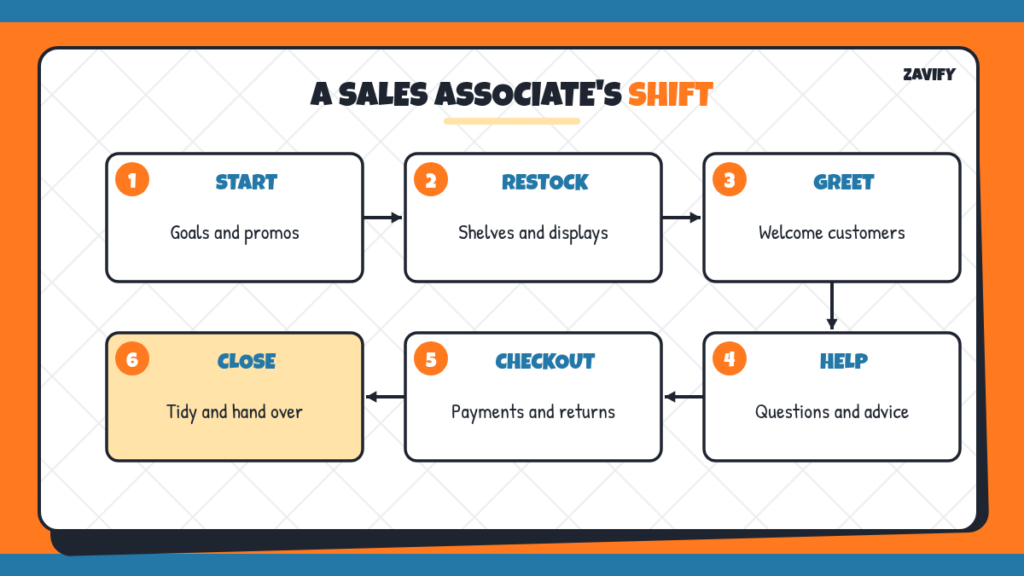
A typical shift might look like this:
| Time | Typical Tasks |
|---|---|
| Start of shift | Check messages, sales goals and promotions |
| Morning | Restock shelves, arrange displays, greet early customers |
| Midday | Help customers, answer questions, handle checkout |
| Afternoon | Process returns, assist with fitting rooms or demos |
| End of shift | Tidy the floor, count stock or cash, hand over to the next team |
Busy periods, such as weekends and the holiday season, focus almost entirely on helping customers quickly and keeping the store organised.
1. Learn the Products
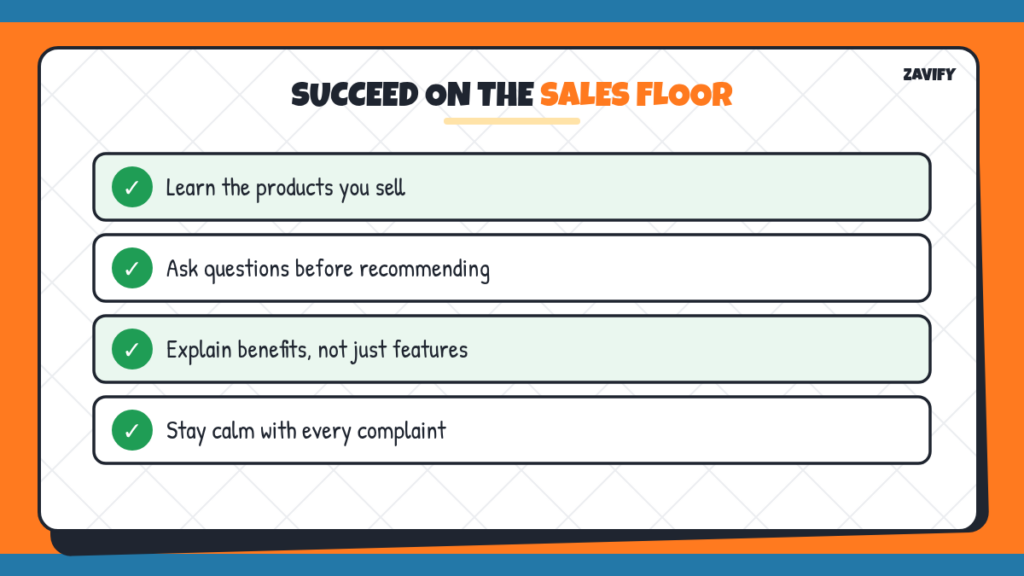
Customers trust associates who know the products. Spend quiet moments reading labels, trying items and asking experienced colleagues for tips. Even a few key facts per product make a difference.
2. Greet Every Customer
A friendly greeting within a few seconds of someone entering your area makes them feel welcome. Keep it simple and natural, and avoid the pushy “Can I help you?” that invites a quick “No thanks.” Try “Let me know if you’re looking for anything in particular.”
3. Ask Questions Before Recommending
Find out what the customer needs: who the item is for, how they will use it and their budget. Good questions lead to better recommendations and happier customers.
4. Explain Benefits, Not Just Features
Instead of “This jacket is water-resistant,” say “This will keep you dry on your commute.” Connecting features to the customer’s life makes products easier to choose.
5. Suggest Related Items Helpfully
If someone buys a phone, they may need a case or charger. Suggest add-ons only when they genuinely help, and respect a “no.” Helpful suggestions raise sales without feeling pushy.
6. Handle Complaints Calmly
Listen fully, apologise for the inconvenience, explain what you can do and involve a manager if needed. Staying calm under pressure is one of the most valued skills in retail.
7. Keep Your Area Organised
A tidy, well-stocked area helps customers find things and makes the store look professional. Managers notice associates who keep standards high without being asked.
8. Learn the Systems
Get comfortable with the point-of-sale system, returns process, inventory tools and store policies. Accuracy at checkout builds trust with customers and managers.
9. Track Your Progress and Ask for Feedback
Many stores set sales or customer satisfaction targets. Know your numbers, ask your manager what you could improve and set small personal goals each week.
Sales Associate Pay and Job Outlook
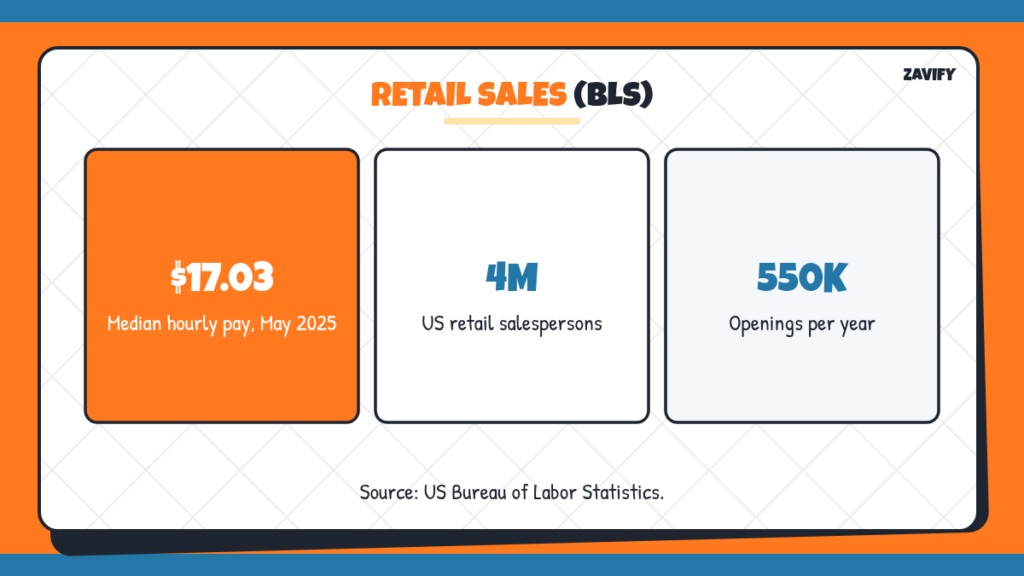
The BLS reports a median wage of $17.03 per hour for retail salespersons in May 2025, with about 4 million people working in the role. Employment is projected to stay roughly flat from 2025 to 2035 as online shopping grows, but around 550,000 openings are expected each year across retail sales jobs, mostly from people moving into other roles. Some stores, especially those selling cars, electronics or furniture, add commission on top of hourly pay.
Skills You Need
The most important skills are friendly communication, patience, basic math, product knowledge and teamwork. Reliability matters a lot too: showing up on time and covering shifts when needed makes you someone managers trust. Many associates also learn to handle cash, use inventory software and solve problems on the spot.
How to Write a Sales Associate Resume
Focus on customer-facing experience and results. Use clear bullet points, such as “Helped 50+ customers per shift,” “Exceeded monthly sales target by 15%” or “Trained three new team members.” Volunteering, campus jobs and club roles also count. If you are a student, our guide on whether to put your GPA on your resume can help you decide what to include.
Where a Sales Associate Job Can Lead
Retail is a strong starting point. Associates often move into key holder, assistant manager and store manager roles. Others use their experience to move into inside sales, account management or customer success at larger companies. The communication and resilience you build on the shop floor transfer directly to roles like inside sales and B2B sales. Our sales careers guide maps out the options.
Commission vs Hourly Roles
Most retail associates earn an hourly wage. In some stores, especially those selling high-value items such as cars, mattresses, furniture, appliances or electronics, part of the pay comes from commission on each sale. Commission roles can pay more for strong performers but are less predictable. Ask during the interview how pay works, whether there are sales targets and how commission is calculated, so you can compare offers fairly.
Pros and Cons of the Job
| Pros | Cons |
|---|---|
| Easy to get started | Often modest hourly pay |
| Flexible and part-time options | Evening, weekend and holiday shifts |
| Builds people skills fast | Time on your feet all day |
| Clear path to management | Busy seasons can be stressful |
How to Ace the Interview
Retail interviews are usually short and friendly, but preparation still helps. Expect questions like “How would you handle an upset customer?”, “Tell me about a time you worked on a team” and “Why do you want to work here?” Answer with short, real examples from school, volunteering or previous jobs. Show that you know the store: mention a product you like or something you noticed about the customer experience.
Dress one step smarter than the store’s usual staff, arrive a few minutes early and be ready to discuss your availability honestly. Many managers care most about reliability and attitude, so a positive, flexible approach often matters more than experience.
Tips for Busy Holiday Seasons
The weeks around Black Friday and the end-of-year holidays are the busiest in retail. Stores often hire seasonal staff, which can be a great way to get your foot in the door. During these periods, focus on speed, accuracy and a calm tone. Learn the current promotions and return policies before your shift, wear comfortable shoes and take your breaks seriously. Associates who stay positive under holiday pressure are often the first to be offered permanent roles.
Common Mistakes New Associates Make
Avoid these mistakes in your first months:
- Waiting for customers to ask for help.
- Pushing products the customer does not need.
- Not learning basic product details.
- Letting the sales floor become messy.
- Taking complaints personally.
Frequently Asked Questions
What does a sales associate do?
They greet customers, help them find and choose products, answer questions, process payments and keep the store organised.
How much does a retail sales associate make?
The BLS reports a median of $17.03 per hour for retail salespersons in May 2025. Some roles add commission.
Do you need experience to be a sales associate?
Usually not. Most employers train new hires on the job, though customer service experience helps.
Is sales associate a good first job?
Yes. It builds communication, problem-solving and teamwork skills that are useful in almost any career.
What skills should I put on a sales associate resume?
Customer service, communication, product knowledge, cash handling, teamwork and any sales results you achieved.
Can a sales associate become a manager?
Yes. Many store managers started as associates and moved up through key holder and assistant manager roles.
Conclusion
A sales associate helps customers find and buy products, and in doing so builds some of the most useful skills in business. The job is easy to start and offers a clear path to management or other sales roles.
Learn the products, ask questions before recommending and stay calm with every customer. Then use your experience as a stepping stone to bigger opportunities in sales.