Introduction
Every sale starts with someone showing even a small sign that they might buy. Maybe they downloaded a guide, filled in a form, visited a pricing page or replied to an email. In sales, that early signal has a name: a lead.
This guide explains what a sales lead is, the different types you will hear about in sales jobs, how a lead becomes a customer and nine easy steps to qualify leads so you spend time on the right people.
- A lead = a potential customer who has not yet been qualified.
- Leads can be cold, warm or hot.
- Qualifying leads saves time for sellers and buyers.
Table of Contents
What Is a Sales Lead?
A sales lead is a person or company that might become a customer. They have either shown interest in your product or match the profile of your ideal customer, but you do not yet know whether they have the need, budget, authority and timing to buy.
A sales lead can come from many places: website forms, webinar sign-ups, trade shows, referrals, social media, purchased lists or a salesperson’s own research. Not every lead is a good fit, which is why qualification is such an important step.
- Lead: a potential customer, not yet qualified.
- Prospect: a lead that has been checked and looks like a good fit.
- Opportunity: a qualified prospect in an active sales process.
How Does a Lead Become a Customer?
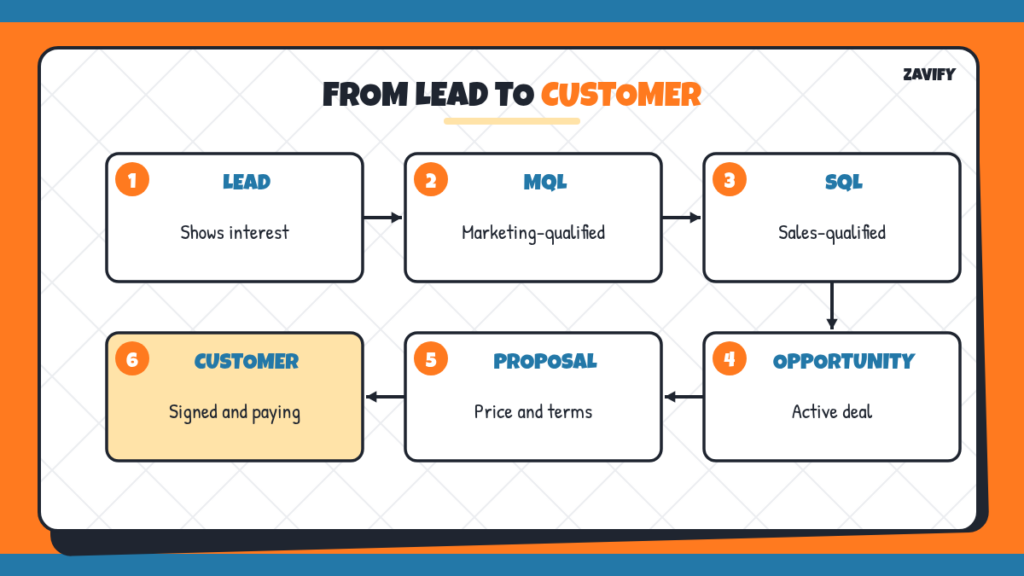
Most companies move leads through a series of stages:
| Stage | Meaning | Usually Owned By |
|---|---|---|
| Lead | Shows interest or matches the target profile | Marketing |
| MQL | Marketing-qualified lead: engaged enough to pass to sales | Marketing |
| SQL | Sales-qualified lead: confirmed fit after a conversation | SDR |
| Opportunity | Active deal with a defined need and timeline | Account executive |
| Customer | Signed and paying | Account executive, then customer success |
The names vary between companies, but the idea is the same: each stage filters out people who are not a good fit, so sellers can focus on those most likely to buy.
Types of Sales Leads
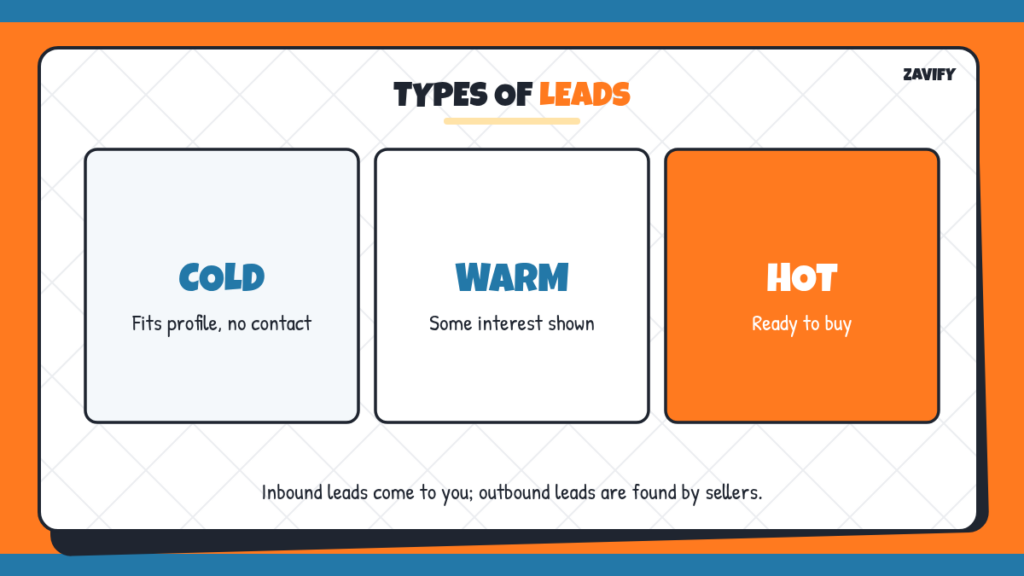
Leads are often grouped by how interested they are:
- Cold leads: match your target profile but have not interacted with you yet.
- Warm leads: have shown some interest, such as opening emails or downloading content.
- Hot leads: are actively looking to buy, for example by requesting a demo or a price.
- Inbound leads: come to you through marketing, search or referrals.
- Outbound leads: are found by sellers through research and outreach.
1. Define Your Ideal Customer Profile
Write down the industries, company sizes, job titles and problems that make someone a strong fit. Without this, every lead looks equally promising.
2. Check Basic Fit First
Before reaching out, confirm the basics: is this company the right size, in the right market and likely to have the problem you solve? A few minutes of research can save a wasted call.
3. Look at Engagement Signals
Has the lead visited your pricing page, attended a webinar or opened several emails? Strong engagement usually means higher interest and better timing.
4. Reach Out Quickly
An inbound sales lead cools down fast. Respond to demo requests and form submissions as soon as you can, ideally the same day, while the person still remembers why they contacted you.
5. Ask About the Problem
On your first conversation, focus on their situation: what they are trying to achieve, what is getting in the way and why it matters now. A real, urgent problem is the strongest sign of a good sales lead.
6. Confirm Budget
You do not need an exact number, but you should know whether money is available or could be made available for a solution like yours.
7. Identify the Decision-Makers
Find out who else is involved in buying decisions. A lead might be very interested but have no authority to sign; knowing this early helps you plan.
8. Understand the Timeline
Ask when they hope to solve the problem. A lead planning to act this quarter needs different follow-up from one looking six months ahead.
9. Record and Score the Lead
Log everything in your CRM and give the lead a score or status, such as qualified, nurture or not a fit. Clear records help your team prioritise and follow up at the right time.
Popular Lead Qualification Frameworks
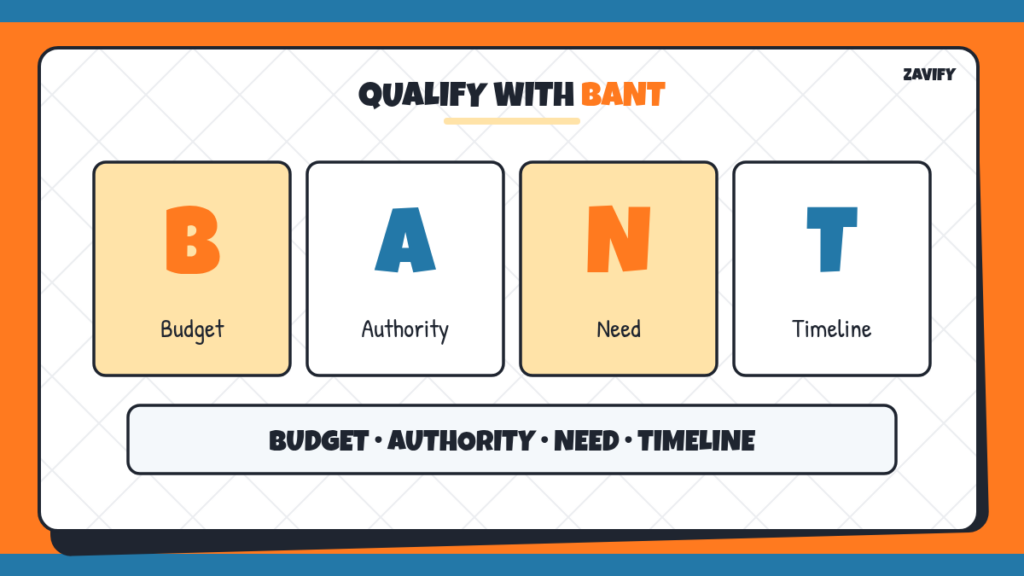
Many teams use simple frameworks to answer how to qualify a sales lead consistently. BANT checks budget, authority, need and timeline. CHAMP starts with challenges before asking about authority, money and prioritisation. MEDDIC is a more detailed approach used for complex enterprise deals. You do not need to memorise them all, but knowing BANT is useful for interviews.
Lead Scoring Explained
Lead scoring gives each lead points based on fit and behaviour. For example, a matching job title might earn 10 points, a visit to the pricing page 15 points and a demo request 30 points. Leads above a certain score are passed to sales. Scoring helps busy teams focus on the most promising people first, though it should always be checked by human judgment.
Where Do Sales Leads Come From?
Common sources include content marketing and SEO, paid ads, social media, webinars, trade shows, referrals from happy customers, partner companies and outbound research by sellers. Referrals usually convert best, because trust is already in place. If you plan to phone consumers rather than businesses, check the rules of the FTC’s National Do Not Call Registry first. Our guide to cold calling covers outbound outreach in detail.
Who Works With Leads?
In many companies, marketing generates leads, sales development representatives qualify them and account executives close the deals. If you are starting a sales career, you will probably begin as an SDR, spending much of your day researching and qualifying leads. Read our guides to inside sales and B2B sales to learn more about these roles.
Example: Qualifying a Sales Lead Step by Step
Imagine you work for a company that sells scheduling software. A sales lead arrives: the office manager of a dental group with four clinics downloaded your guide on reducing no-shows. The fit looks good, since multi-location clinics are your ideal customer. She also visited your pricing page twice, a strong engagement signal.
You call the same afternoon. She explains that missed appointments cost the group thousands each month and that the owner wants a fix before the new year. Budget has been set aside for “patient experience” tools, and the owner makes the final decision. You mark the lead as sales-qualified, book a demo with both of them and log every detail in the CRM. In about 15 minutes, a form download became a real opportunity.
Nurturing Leads That Are Not Ready Yet
Many leads are a good fit but not ready to buy. Instead of dropping them, put them into a nurture track: occasional helpful emails, invitations to webinars, relevant case studies and a check-in when their timeline approaches. A lead that says “maybe next year” can become a strong customer if you stay helpful and patient without being pushy.
Measuring Lead Quality
Teams track a few simple numbers to see whether their leads are any good. Conversion rate shows the share of leads that become opportunities or customers. Speed to lead measures how quickly someone follows up. Cost per lead shows how much marketing spends to generate each one. Comparing these numbers by source tells you which channels bring the best leads, so budget and effort can move toward what works.
Common Mistakes With Sales Leads
These mistakes waste time and lose deals:
- Treating every lead as ready to buy.
- Following up too slowly on inbound requests.
- Skipping questions about budget and authority.
- Not recording details in the CRM.
- Giving up after one unanswered message.
Frequently Asked Questions
What is a sales lead?
A person or company that might become a customer but has not yet been qualified.
What is the difference between a lead and a prospect?
A lead is unqualified; a prospect has been checked and looks like a good fit.
What is an MQL and an SQL?
An MQL is a marketing-qualified lead that has engaged enough to pass to sales. An SQL is a sales-qualified lead confirmed as a good fit after a conversation.
How do you qualify a sales lead?
Check fit, engagement, problem, budget, decision-makers and timeline, often using a framework like BANT.
What is a hot lead?
A lead that is actively looking to buy, for example by requesting a demo or a quote.
How quickly should I follow up on a lead?
As soon as possible, ideally the same day for inbound leads.
Conclusion
A sales lead is the starting point of every sale: someone who might become a customer. Qualifying leads carefully means you spend time on the people you can genuinely help.
Define your ideal customer, respond quickly and ask about the problem, budget, decision-makers and timeline. For more on starting a sales career, read our sales careers guide.