Introduction
Most of the software businesses use today, from email marketing tools to accounting apps, is sold as a subscription rather than a one-time purchase. Selling that kind of software is a specialised field, and it has become one of the most popular starting points for sales careers in the US.
This guide explains what SaaS sales is, how it differs from traditional selling, the roles and metrics you will hear about, and nine easy steps to get started even if you have never worked in tech.
- SaaS = software as a service, paid by subscription.
- Revenue comes from keeping and growing customers, not just winning them.
- Common entry role: sales development representative (SDR).
Table of Contents
What Is SaaS Sales?
SaaS sales is the process of selling software-as-a-service products: cloud-based software that customers access online and pay for monthly or yearly. Instead of buying a license once, customers subscribe, which means the software company must keep them happy to keep earning.
This changes how selling works. The first sale is only the beginning. Renewals, upgrades and additional users matter just as much as new customers. That is why SaaS teams often include customer success and account management roles alongside new-business sellers.
- Examples: CRM tools, project management apps, HR software, cybersecurity platforms.
- Buyers: small businesses, mid-size companies and large enterprises.
- Pricing: per user, per feature tier or by usage.
How Does SaaS Sales Work?
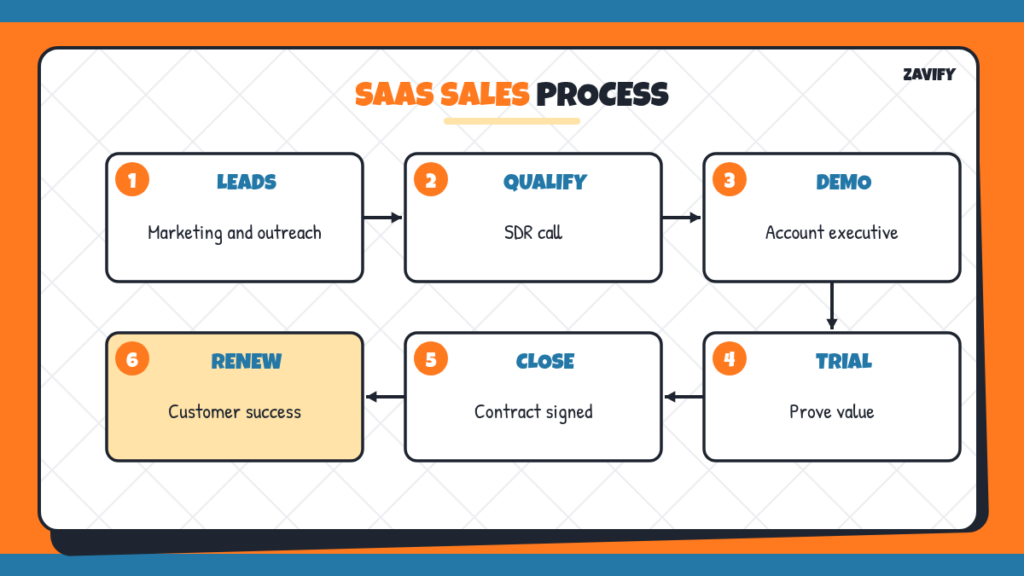
A typical SaaS sales process looks like this:
| Stage | What Happens | Owner |
|---|---|---|
| Lead generation | Marketing, content and outreach create interest | Marketing, SDR |
| Qualification | Check fit, need, budget and timing | SDR |
| Discovery and demo | Understand problems and show the product | Account executive |
| Trial or pilot | Customer tests the software | AE, sales engineer |
| Close | Contract and pricing agreed | Account executive |
| Onboarding and renewal | Customer adopts the product and renews | Customer success |
Some SaaS products are cheap enough that customers sign up online without talking to anyone. In that case, sales teams focus on larger customers or on helping free users upgrade.
1. Learn the SaaS Business Model
Understand why recurring revenue matters. A customer paying $1,000 a month for three years is worth $36,000, so keeping customers is as important as winning them.
2. Learn the Key Metrics
Get comfortable with terms like MRR, ARR, churn and customer lifetime value (see the metrics section below). Using them correctly in interviews shows you understand the business.
3. Understand the Roles
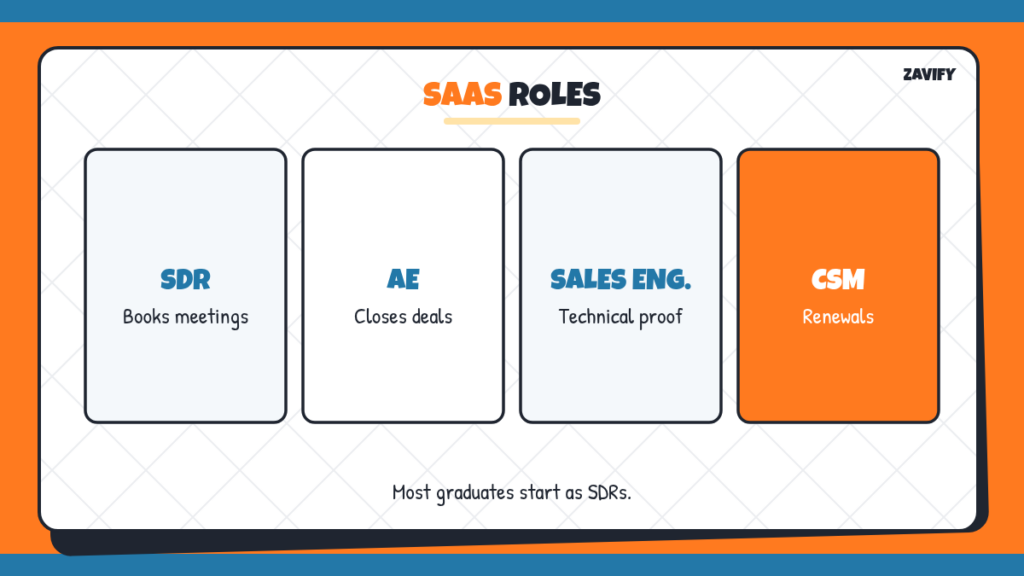
Most SaaS sales teams have SDRs who book meetings, account executives who close deals, sales engineers who handle technical questions and customer success managers who drive renewals. Knowing who does what helps you choose a starting point.
4. Pick a Product Area You Find Interesting
HR software, marketing tools, finance apps and cybersecurity all sell to different buyers. Choose a space you are curious about, because you will learn it deeply.
5. Try the Products Yourself
Many SaaS products offer free trials. Sign up for a few, explore them and note what problems they solve. It gives you real examples to talk about in interviews.
6. Practise Discovery and Demos
Learn to ask questions about a buyer’s current process and pain points before showing anything. Practise a short demo of a tool you know well.
7. Build Your LinkedIn Presence
SaaS recruiters search LinkedIn heavily. Write a clear headline, share what you are learning about sales and connect with SDRs and account executives at companies you admire.
8. Prepare for SDR Interviews
Expect a mock cold call or email-writing task. Our guide to cold calling explains how to structure a call and stay calm.
9. Compare Offers Carefully
Look at base salary, commission structure, training quality, quota attainment and the company’s growth. Our guide to OTE meaning explains what to ask.
Key SaaS Sales Metrics
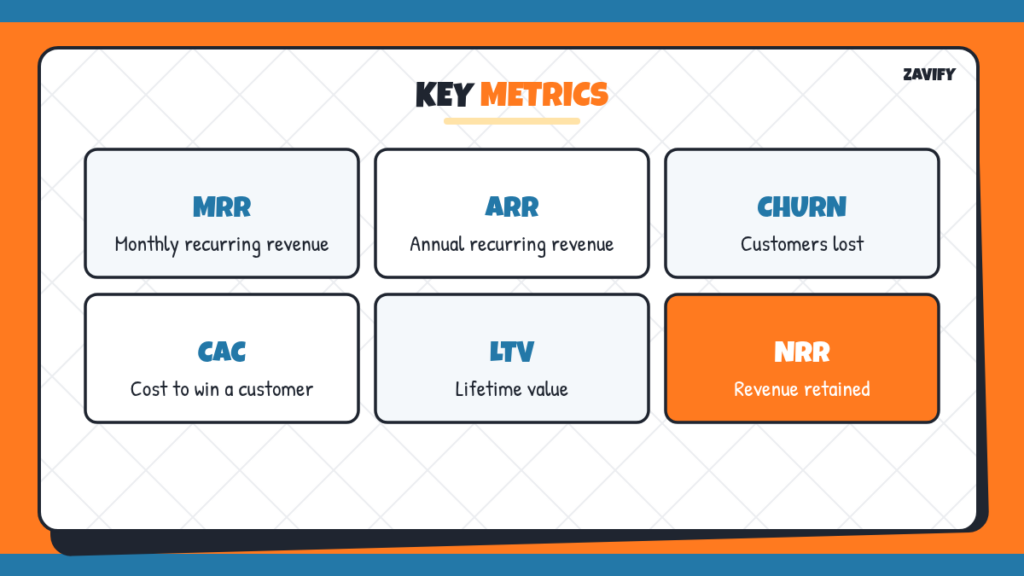
- MRR (monthly recurring revenue): predictable revenue earned each month from subscriptions.
- ARR (annual recurring revenue): recurring revenue on a yearly basis, often MRR × 12.
- Churn rate: the share of customers or revenue lost over a period.
- CAC (customer acquisition cost): what it costs to win a new customer.
- LTV (customer lifetime value): total revenue a customer brings over the relationship.
- Net revenue retention: how revenue from existing customers grows or shrinks, including upgrades and losses.
SaaS Sales vs Traditional Sales
| Feature | SaaS Sales | Traditional Sales |
|---|---|---|
| Payment | Recurring subscription | One-time purchase |
| Focus after sale | Renewal and expansion | Often limited |
| Trial before buying | Common | Less common |
| Key metric | ARR and churn | Total sales value |
How Much Do SaaS Salespeople Earn?
Pay is usually a base salary plus commission. SDRs often have a higher share of base pay, while account executives carry more commission. Technical roles such as sales engineer earned a median of $124,900 in May 2025, according to the US Bureau of Labor Statistics. Pay varies widely by company size, location and performance.
Land and Expand: How SaaS Accounts Grow
Many SaaS companies use a “land and expand” approach. They start with a small deal, such as one team or department, then grow the account by adding users, upgrading plans or selling extra products once the customer sees results. This is why customer success and account management are such important parts of the model, and why sellers who build genuine relationships often earn more over time.
Is SaaS Sales a Good Career?
For many graduates, yes. It offers structured training, clear promotion paths from SDR to account executive, remote or hybrid options and transferable skills. The pace can be intense and quotas are demanding, so it suits people who enjoy learning quickly and working toward measurable goals.
Product-Led Growth and the Seller’s Role
Some software companies let anyone sign up for a free plan or trial, then rely on the product itself to convince users to pay. This is called product-led growth. Even in these companies, people still play a big role. Sellers reach out to teams that are already using the free version heavily, help them roll the product out across the company and negotiate larger contracts.
For a new seller, this can be an easier start, because many conversations begin with people who already know and use the product. Instead of convincing them it works, you help them get more value from it.
A Simple Example of a Subscription Deal
Imagine a project management app priced at $15 per user per month. A 40-person marketing agency signs up for a trial. An SDR notices heavy usage and books a call. The account executive learns that the agency struggles to track client deadlines, runs a short demo focused on client dashboards and offers an annual plan. The agency signs for 40 users, worth $7,200 a year. Six months later, its sales team joins too, adding 20 users. That growth inside one customer is exactly how subscription businesses scale.
Tools You Will Use
Expect to work with a CRM such as Salesforce or HubSpot, a sales engagement platform for email and call sequences, a video meeting tool, LinkedIn Sales Navigator and product analytics dashboards that show how customers use the software. You will be trained on the specific setup, so focus on understanding why each tool matters.
Common SaaS Sales Mistakes
These mistakes hurt results:
- Focusing only on new deals and ignoring renewals.
- Giving feature tours instead of solving problems.
- Overselling and causing early churn.
- Not learning the key metrics.
- Skipping discovery before a demo.
Frequently Asked Questions
What is SaaS sales?
It is selling cloud-based software that customers pay for through a subscription.
What does an SDR do in SaaS?
An SDR researches prospects, makes calls, sends emails and books meetings for account executives.
Do I need a tech background for SaaS sales?
No. Many successful SaaS sellers studied business, communications or the humanities. Curiosity and willingness to learn the product matter most.
What is ARR in SaaS sales?
ARR, or annual recurring revenue, is the yearly value of all active subscriptions.
Is SaaS sales remote?
Many roles are remote or hybrid, especially in inside sales teams, though some companies prefer office-based SDR teams.
How long does it take to move from SDR to account executive?
Often around one to two years, depending on performance and the company.
Conclusion
SaaS sales means selling subscription software, where keeping and growing customers matters as much as winning them. Learning the model, the metrics and the roles gives you a strong head start.
Start by trying products, practising discovery and preparing for SDR interviews. Remember that every experienced account executive started with no product knowledge and a nervous first call. Pick a company whose product you believe in, ask lots of questions during your first months and treat every customer conversation as training. The habits you build in your first year, curiosity, preparation and consistent follow-up, will shape the rest of your career. For related guides, read B2B sales, inside sales and our sales careers guide.