Introduction
Some customers find a company on their own, through search, social media or a friend’s recommendation. Many do not. To reach those buyers, sales teams go to them directly, with calls, emails and messages. That proactive approach is called outbound sales.
This guide explains what outbound sales is, how it compares with inbound sales, which roles and channels are involved and nine easy steps to run outreach that feels useful rather than spammy.
- Outbound = the seller starts the conversation.
- Inbound = the buyer starts the conversation.
- Most B2B teams use a mix of both.
Table of Contents
What Is Outbound Sales?
Outbound sales is a sales approach where the salesperson initiates contact with potential customers who have not yet shown interest. Common methods include cold calls, cold emails, LinkedIn messages and, in some industries, in-person visits.
It is especially common in B2B companies selling to specific industries or larger accounts, where waiting for buyers to find you would be too slow or too random.
- Channels: phone, email, LinkedIn, video messages, events.
- Common roles: SDRs, BDRs and account executives.
- Goal: start conversations and book qualified meetings.
How Does Outbound Sales Work?
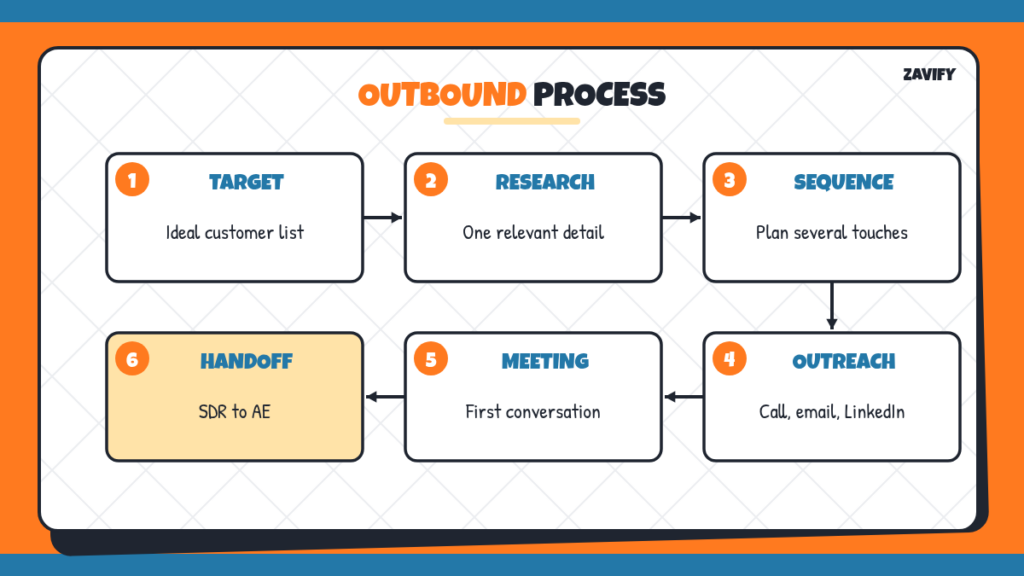
Most outbound processes follow a repeatable sequence:
| Step | What Happens | Owner |
|---|---|---|
| Target list | Choose companies and roles that fit | SDR, marketing |
| Research | Find relevant details about each prospect | SDR |
| Sequence | Plan several touches over a few weeks | SDR |
| Outreach | Calls, emails and LinkedIn messages | SDR |
| Meeting | First conversation with an interested prospect | SDR or AE |
| Handoff | Qualified opportunity passed to an account executive | SDR to AE |
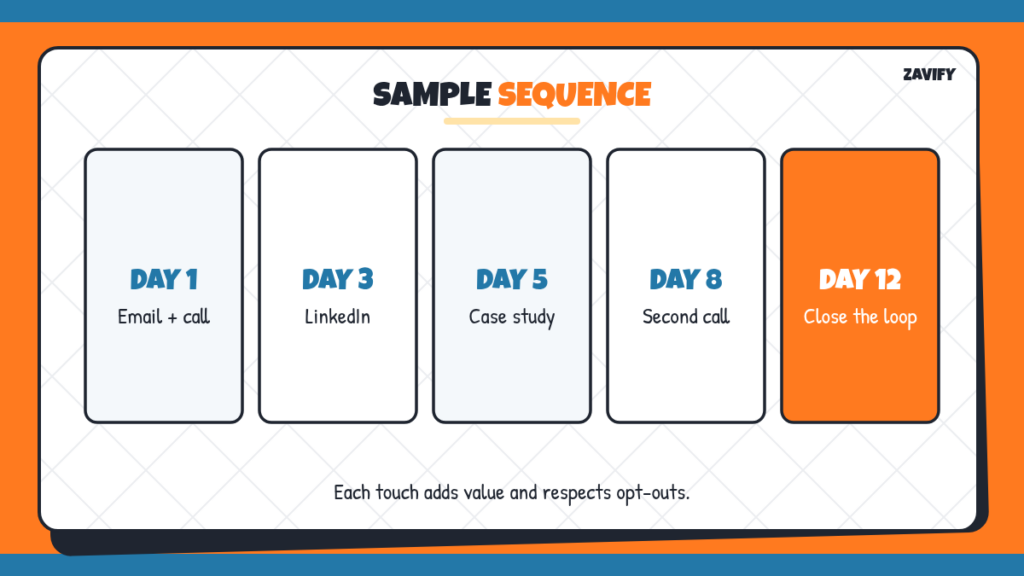
A “sequence” or “cadence” is a planned series of touches, for example a call and email on day one, a LinkedIn message on day three and another email on day seven.
1. Define Your Ideal Customer Profile
List the industries, company sizes and job titles most likely to benefit from your product. Focus beats volume in outbound.
2. Build a Targeted List
Create a list of companies and contacts that match your profile. A smaller, accurate list produces better results than a large, random one.
3. Research Each Prospect
Spend a few minutes learning about each company: recent news, growth, hiring or new products. One relevant detail makes your message stand out.
4. Write Short, Relevant Messages
Keep emails under about 100 words, focus on a problem the prospect likely has and ask one clear question. Avoid long introductions about your company.
5. Use Multiple Channels
Combine calls, emails and LinkedIn. Some people respond to one channel and ignore others. Our guide to cold calling covers phone outreach in detail.
6. Follow Up Consistently
Most replies come after several touches, not the first. Plan a sequence of follow-ups spaced over a few weeks, each adding something new.
7. Personalise at Scale
Use templates for structure but personalise the first line or the problem you mention. Small touches show you are not sending the same message to everyone.
8. Respect Opt-Outs and Rules
Include a clear way to unsubscribe from emails and honour requests not to be contacted. US commercial email rules are set out in the FTC’s CAN-SPAM compliance guide, and calls to consumers have additional rules.
9. Track and Improve Your Numbers
Measure open rates, reply rates, meetings booked and meetings that turn into opportunities. Test one change at a time, such as a new subject line or opening line.
Outbound vs Inbound Sales
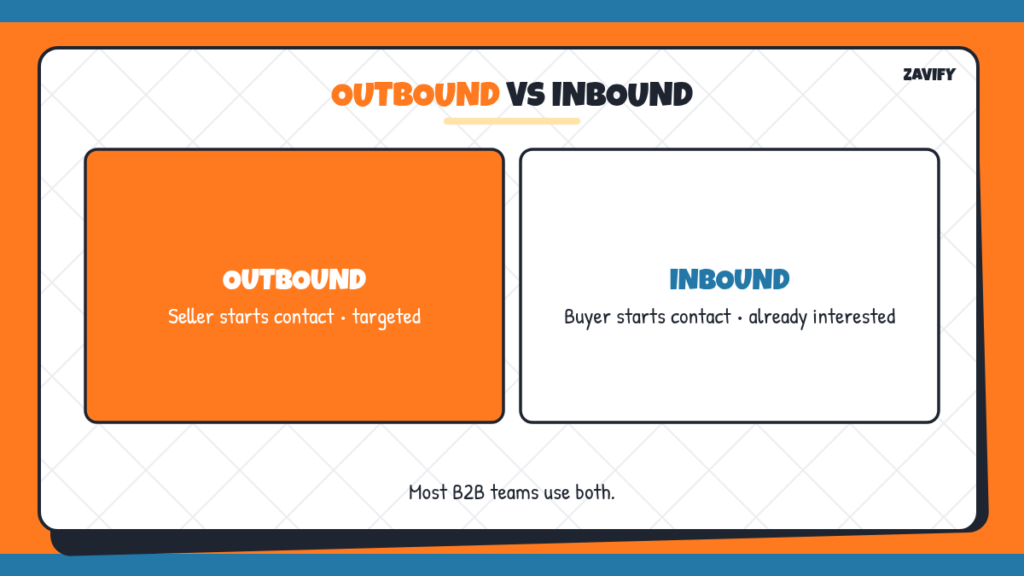
| Feature | Outbound Sales | Inbound Sales |
|---|---|---|
| Who starts contact | Seller | Buyer |
| Typical channels | Calls, cold email, LinkedIn | Website forms, content, search |
| Buyer awareness | Often low at first | Already interested |
| Control over targeting | High | Lower |
| Main skill | Prospecting and persistence | Fast, helpful response |
Many companies combine both: inbound brings interested leads, while outbound targets ideal accounts that have not found the company yet.
Example of a Simple Outbound Sequence
Day 1: short personalised email and a phone call. Day 3: LinkedIn connection request with a brief note. Day 5: follow-up email sharing a relevant case study. Day 8: second call. Day 12: short “closing the loop” email asking whether the topic is a priority this quarter. Each touch adds value and respects the prospect’s time.
Is Outbound Sales a Good Career Start?
For many graduates, yes. SDR roles focused on outbound teach research, writing, phone skills and resilience, and they are a common route to account executive. Read our sales careers guide and inside sales guide to learn more.
Writing a Good Cold Email
A strong outreach email has four parts. The subject line is short and specific, often just a few words about the prospect’s world. The first line shows you did your research, for example mentioning a recent expansion or job posting. The middle connects a likely problem to how you help, ideally with a brief example of a similar customer. The closing asks a simple question, such as whether the topic is a priority this quarter, rather than demanding a long meeting.
Keep the tone friendly and human. Read your email out loud before sending; if it sounds like an advertisement, rewrite it. Mobile readers will see only the first few lines, so make them count.
Using LinkedIn for Outreach
LinkedIn is useful for research and warm introductions. Engage with a prospect’s posts, send a short connection request that explains why you are reaching out and avoid pitching in the first message. A thoughtful comment on a prospect’s post can open more doors than a generic sales message.
Measuring Success
Common benchmarks include connect rate on calls, reply rate on emails, meetings booked per week and the share of meetings that become real opportunities. Rather than chasing industry averages, compare your own numbers over time. Small improvements, such as a better subject line or calling at a different time of day, often add up to a big difference over a quarter.
Account-Based Outreach
Some companies take a more focused approach called account-based selling. Instead of contacting hundreds of companies, they pick a small number of high-value target accounts and coordinate outreach to several people at each one, often with marketing support such as personalised ads or events. It takes more research per account but can lead to larger deals and stronger relationships.
Handling Replies
When someone replies, respond quickly and keep the conversation focused on them. If they are interested, suggest a short call with a specific time. If they are not the right person, politely ask who is. If they say no, thank them and respect their decision; a respectful exit leaves the door open for the future. Common responses, such as “send me more information,” are covered in our guide to handling sales objections.
Building Resilience
Outbound involves a lot of silence and rejection, which can be draining. Set daily activity goals you control, celebrate small wins like a thoughtful reply and remember that low reply rates are normal. Sharing tips with teammates and reviewing what works each week makes the process more motivating and helps everyone improve faster.
Common Outbound Sales Mistakes
These mistakes hurt results and reputation:
- Sending generic messages to huge lists.
- Writing long emails about your own company.
- Giving up after one or two attempts.
- Ignoring unsubscribe requests.
- Not tracking which messages work.
Key Takeaways
- Focus on a clear ideal customer profile and a quality list.
- Research briefly and personalise the first line.
- Use several channels and follow up over a few weeks.
- Respect opt-outs and communication rules.
- Track replies and meetings, and test one change at a time.
Done well, outbound is not about pressure. It is about finding people who genuinely have a problem you can solve and starting a respectful conversation with them at the right time.
Frequently Asked Questions
What is outbound sales?
A sales approach where sellers reach out first to potential customers who have not yet shown interest.
What is the difference between outbound vs inbound sales?
Outbound means the seller starts contact; inbound means the buyer reaches out first.
Is outbound sales the same as cold calling?
Cold calling is one part of outbound sales, which also includes cold email, LinkedIn and other channels.
How many follow-ups should I send?
Many teams use several touches over two to four weeks, adding value each time and respecting opt-outs.
Who does outbound sales?
Usually SDRs and BDRs, sometimes account executives for key accounts.
Is outbound sales still effective?
Yes, when it is targeted, relevant and respectful. Generic mass outreach performs poorly.
Conclusion
Outbound sales means reaching out first to potential customers. Targeted lists, relevant messages and consistent follow-up make it effective and respectful.
Start small, track your numbers and keep improving your messages. For related guides, read cold calling and sales pipeline.