Introduction
Whether you are a new sales rep, a small business owner or a student running a campus fundraiser, you need to know one thing: are we on track? Without a simple way to track sales progress, it is easy to feel busy while falling behind.
This guide explains how to track sales progress step by step, which sales metrics actually matter, how to build a simple dashboard and how to turn the numbers into better decisions every week.
- Track both activities (what you do) and results (what you win).
- Compare progress against a clear target and timeline.
- Review weekly, not just at the end of the month.
Table of Contents
What Does It Mean to Track Sales Progress?
To track sales progress means regularly measuring the activities and results that lead to sales, then comparing them with your goals. It answers questions like: How many deals have we closed? How many are in progress? Are we doing enough outreach to hit next month’s target?
When you track sales progress well, you combine leading indicators, which predict future results, with lagging indicators, which show what already happened. Calls made and meetings booked are leading indicators; revenue closed is a lagging indicator.
- Activity metrics: calls, emails, meetings, demos.
- Pipeline metrics: number and value of open deals by stage.
- Result metrics: revenue, deals won, average deal size.
How Does Sales Tracking Work?
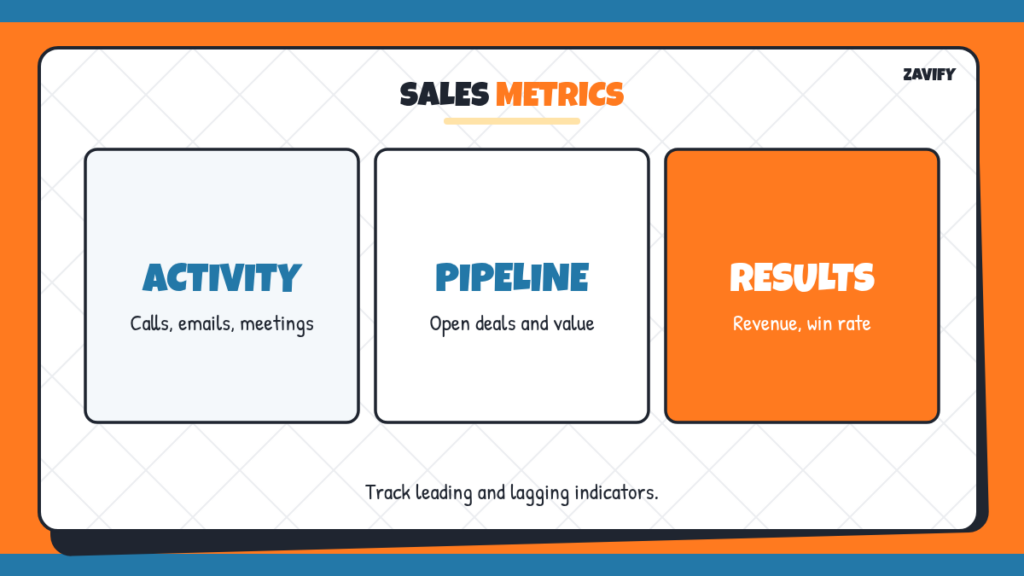
Here are the sales metrics most teams track, grouped by type:
| Metric | Type | What It Tells You |
|---|---|---|
| Calls / emails per day | Activity | Are you doing enough outreach? |
| Meetings booked | Activity | Is outreach turning into conversations? |
| Pipeline value | Pipeline | Is there enough potential revenue? |
| Win rate | Result | How many deals do you close? |
| Average deal size | Result | How valuable is a typical win? |
| Sales cycle length | Result | How long do deals take? |
| Quota attainment | Result | How close are you to target? |
You do not need to track everything to track sales progress effectively. Pick a handful that connect directly to your goal, and track them consistently.
1. Set a Clear Target
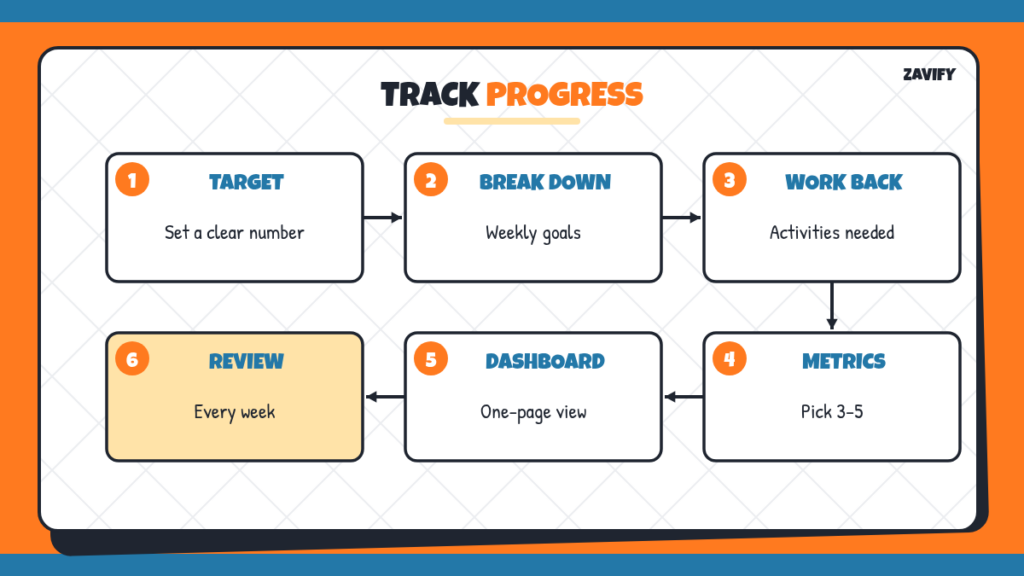
Decide what success looks like for the period, such as $40,000 in new revenue this month or 20 new customers this quarter. A clear number makes progress easy to measure.
2. Break the Target Into Smaller Goals
Turn the big target into weekly goals. If you need 20 customers in a quarter, that is roughly two customers a week.
3. Work Backwards to Activities
Use your conversion rates to estimate the activity needed. If one in five demos becomes a customer and one in four meetings becomes a demo, you need about 20 meetings to win one customer. That tells you how much outreach to plan.
4. Choose a Few Key Metrics
Select three to five metrics that matter most for your role. An SDR might track calls, conversations and meetings booked. An account executive might track pipeline value, win rate and revenue.
5. Use One Source of Truth
Record everything in one place, usually a CRM or a shared spreadsheet. Scattered notes make tracking unreliable. Our guide to sales CRMs explains the options.
6. Build a Simple Dashboard
Create a one-page view showing your target, progress so far, pipeline value and key activity numbers. Charts that compare actual results with targets are especially useful.
7. Review Weekly
Set a fixed time each week to track sales progress and check your numbers. Ask: Are we ahead or behind? Which metric is weakest? What will we change this week?
8. Adjust Your Actions
If meetings are low, increase outreach or improve messaging. If demos are not converting, review your discovery and presentation. Tracking only helps if it changes what you do.
9. Celebrate Progress and Learn From Misses
Recognise wins, even small ones, and look honestly at what did not work. A short monthly review of lessons learned helps you improve steadily.
Example: Tracking a Monthly Target
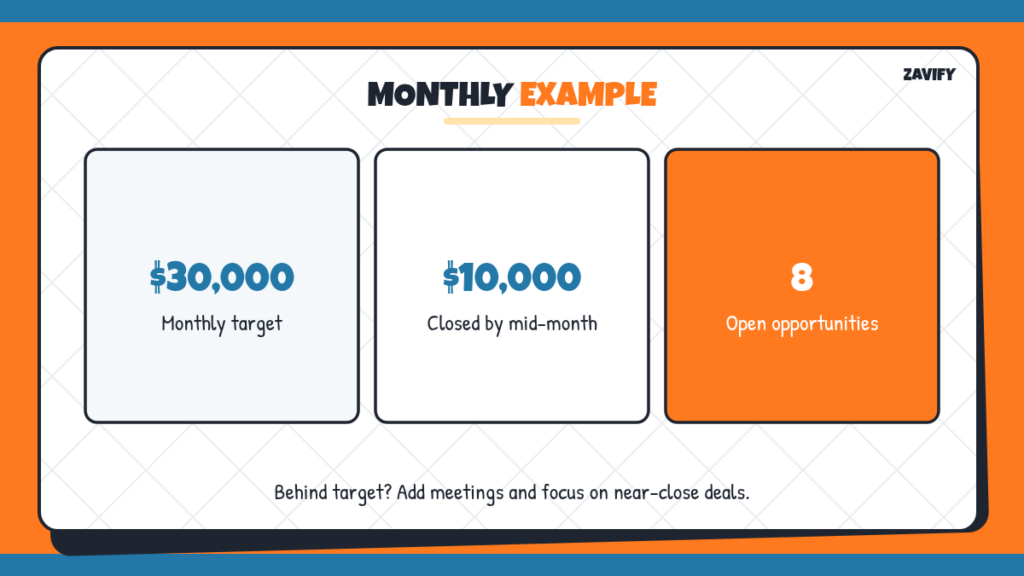
An account executive has a $30,000 monthly target and an average deal size of $5,000, so they need six wins. With a 25 percent win rate, they need about 24 qualified opportunities in their pipeline over time. Halfway through the month, they have closed two deals ($10,000) and have eight active opportunities. Their dashboard shows they are behind, so they ask their SDR for more meetings and focus on the three opportunities closest to closing. That is what tracking is for: spotting the gap early enough to act.
Tools for Tracking Sales Progress
Most teams use a CRM such as Salesforce, HubSpot, Pipedrive or Zoho, which include dashboards and reports. Small businesses and students can start with Google Sheets or Excel, using simple formulas and charts. Our guide to the percentage formula in Excel can help with conversion rate calculations.
How Tracking Connects to the Pipeline
Your pipeline is the foundation of good tracking. If deals are recorded accurately with values and stages, you can see at a glance whether there is enough potential revenue to hit your target. Read our sales pipeline guide to set up stages and exit criteria.
Tracking Progress as a New Sales Rep
In your first months, the best way to track sales progress is to focus on activity metrics you control, such as calls, emails and meetings booked, because results take time to appear. Share your numbers with your manager each week and ask for one piece of feedback. Because most sales roles pay a mix of salary and commission or bonuses, as the US Bureau of Labor Statistics notes, tracking your own results helps you understand your earnings too. Reps who track honestly and improve steadily are often promoted faster than those who only report wins.
Sample Weekly Tracking Template
A simple weekly template can sit in a spreadsheet with one row per week and these columns: outreach attempts, conversations, meetings booked, opportunities created, proposals sent, deals won, revenue won, pipeline value and notes. Add a target row at the top and a formula that shows the percentage of target achieved so far. This takes ten minutes to set up and gives you a clear picture every Friday.
Colour-code cells green when you are ahead of target, yellow when slightly behind and red when well behind. Visual cues make it easier to spot problems at a glance and to explain your progress to a manager or team.
Tracking for Small Businesses and Side Projects
You do not need a big sales team to benefit. A small online shop can track website visitors, add-to-cart rate, orders and average order value. A freelancer can track enquiries, proposals sent and projects won. A student fundraiser can track contacts made, pledges and money collected. The principle is identical: set a target, measure a few numbers regularly and adjust what you do based on what they show.
How to Track Sales Progress With Your Manager
Share a short weekly update with your manager: your target, progress so far, top three opportunities, any risks and what you will focus on next week. Keep it to a few lines. Managers appreciate reps who raise problems early and suggest solutions, rather than surprising them at the end of the month. Over time, this habit builds trust and makes coaching conversations far more useful.
If you work alone, write the same update for yourself. Reading it back each month shows how far you have come and which habits made the biggest difference.
Common Mistakes When Tracking Sales
These mistakes make tracking less useful:
- Tracking too many metrics to act on.
- Only looking at revenue, not leading indicators.
- Updating records irregularly.
- Ignoring the numbers when they look bad.
- Setting targets without checking past conversion rates.
Frequently Asked Questions
How to track sales progress as a beginner?
Set a target, choose a few key metrics, record activity and results in one place and review weekly.
What are the most important sales metrics?
Common ones include pipeline value, win rate, average deal size, sales cycle length and quota attainment, plus activity metrics like meetings booked.
What is the difference between leading and lagging indicators?
Leading indicators, like meetings booked, predict future results; lagging indicators, like revenue, show past results.
How often should I review sales metrics?
Weekly for most teams, with a deeper review each month or quarter.
Can I track sales in a spreadsheet?
Yes. Spreadsheets work well for small teams and individuals; growing teams usually move to a CRM.
What is quota attainment?
The percentage of a sales target a rep or team has achieved in a period.
Conclusion
To track sales progress well, set a clear target, pick a few meaningful metrics and review them every week. The goal is not just to measure but to act early when you are off course.
Start simple, keep one source of truth and connect your tracking to your pipeline. For related guides, read sales funnel and OTE meaning.