Introduction
Maybe a friend from high school messaged you about a “business opportunity,” or an influencer promised you could earn from your phone while studying. Chances are, you were being invited into network marketing.
This guide explains what network marketing is, how the money actually flows, how it differs from an illegal pyramid scheme and what the Federal Trade Commission says about typical earnings. It ends with nine practical steps to evaluate any offer before you spend a dollar.
- Network marketing is also called multi-level marketing (MLM).
- Distributors earn from their own sales and from people they recruit.
- The FTC says most participants earn little or nothing.
Table of Contents
What Is Network Marketing?
Network marketing is a business model where a company sells products through independent distributors rather than stores. Distributors earn commission on what they sell and can also recruit new distributors, earning a share of sales made by their “downline,” the people below them.
Products range from cosmetics and supplements to cleaning supplies, kitchenware and clothing. Distributors are usually independent contractors, not employees, which means they pay their own costs and receive no salary.
- Upline: the people above you who recruited you.
- Downline: the people you recruit, and the people they recruit.
- Starter kit: an initial purchase many companies require or encourage.
How Does Network Marketing Work?
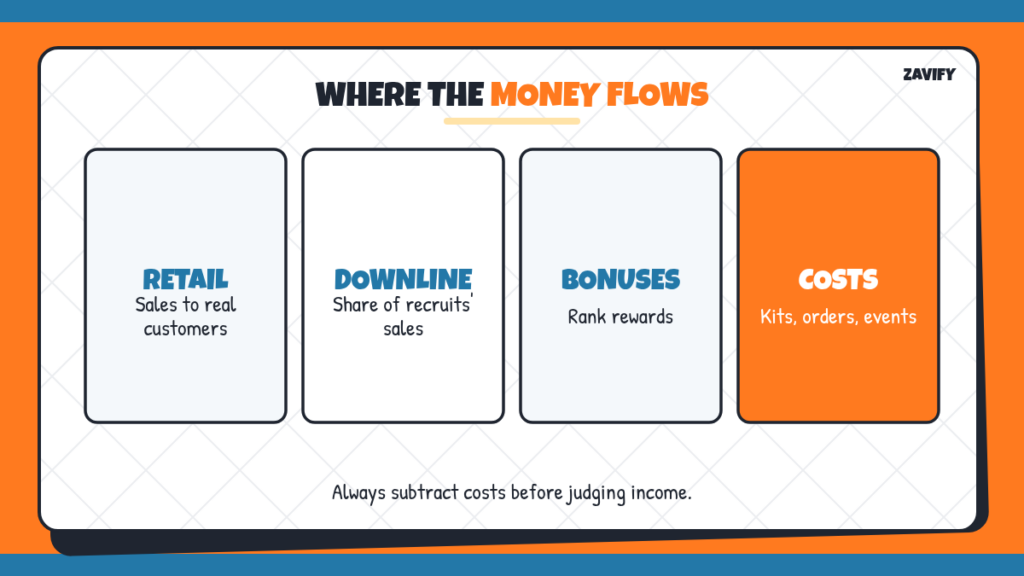
Here is how money typically moves in an MLM:
| Income Source | How It Works | Things to Check |
|---|---|---|
| Retail sales | Selling products to real customers at a markup | Are there real buyers outside the network? |
| Downline commissions | A share of sales made by recruits | Is pay tied to recruiting rather than sales? |
| Rank bonuses | Bonuses for reaching ranks | Do ranks require buying inventory? |
| Costs | Starter kits, monthly orders, events, tools | What is left after all expenses? |
The key question is where most of the money comes from. If it comes mainly from customers who genuinely want the products, the business may be legitimate. If it comes mainly from distributors buying products to stay “active” or from recruiting, it is a serious warning sign.
1. Research the Company
Look up how long the company has existed, read independent reviews and search for news or legal actions. A company with a long, clean record is not automatically a good opportunity, but a history of complaints is a clear red flag.
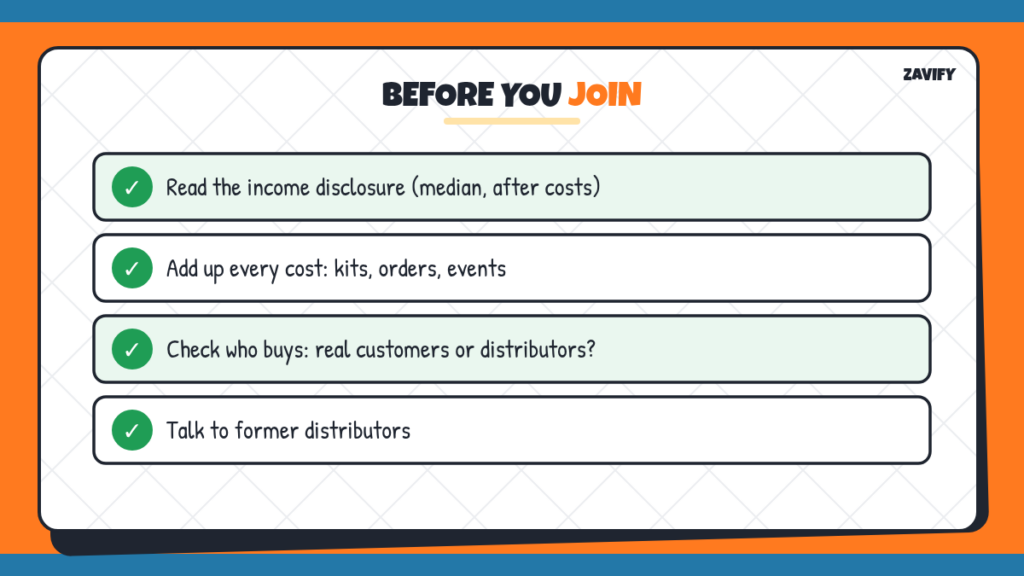
2. Read the Income Disclosure Statement
Many MLMs publish an income disclosure showing what distributors actually earned. Read it carefully. Look for median earnings, not averages pulled up by a few top earners, and remember that these figures often do not subtract expenses.
3. Add Up All the Costs
List every cost: starter kit, monthly product orders, website fees, training, events, samples and travel. Compare that with realistic sales to see whether you could even break even.
4. Check Who Buys the Products
Ask how much of the company’s sales go to real customers outside the network. If most products are bought by distributors themselves, the business depends on recruiting, not genuine demand.
5. Look at How Pay Works
Read the compensation plan. If the biggest rewards depend on recruiting large downlines rather than selling to customers, be very cautious.
6. Watch for Pressure Tactics
Be wary of urgent deadlines, lifestyle photos of luxury cars and vacations, and advice to “fake it till you make it.” Legitimate businesses give you time to think and clear numbers.
7. Understand the Refund Policy
Check whether you can return unsold inventory and get most of your money back. A fair buyback policy reduces your risk, though it does not fix a flawed business model.
8. Talk to Former Distributors
Current recruiters have an incentive to be positive. Former distributors often give a more balanced view of real earnings, time commitment and pressure.
9. Compare It With Other Options
Consider whether a part-time job, freelancing or an entry-level sales role would give you more reliable income and better skills. Our sales careers guide covers paid sales jobs with training and a base salary.
Network Marketing vs Pyramid Schemes
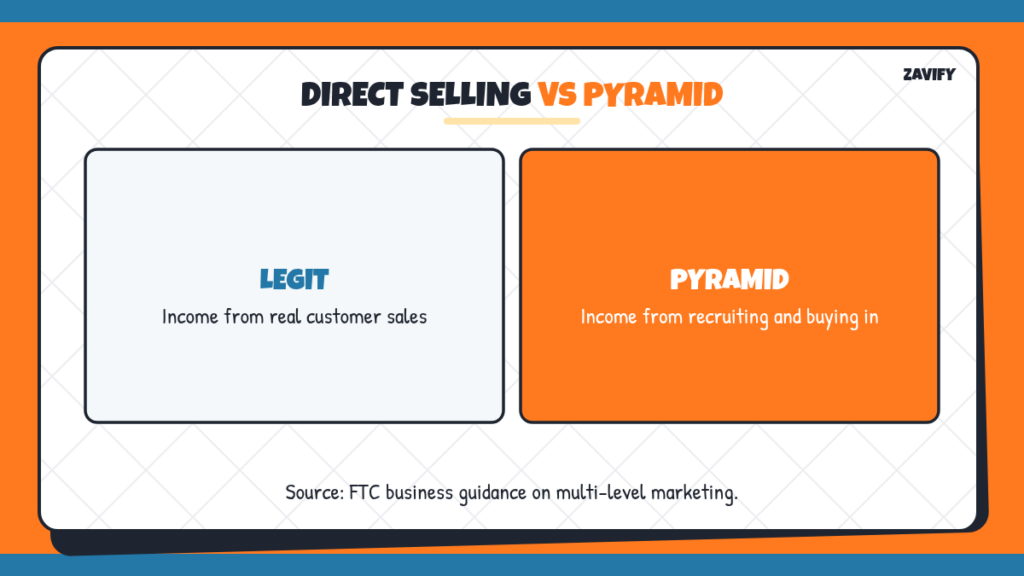
Pyramid schemes are illegal. The Federal Trade Commission’s guidance on multi-level marketing explains that it looks at how a compensation plan works in practice, especially whether rewards are driven by recruiting rather than sales to real customers. Selling real products does not by itself make a business legal.
| Feature | Legitimate Direct Selling | Pyramid Scheme |
|---|---|---|
| Main income source | Sales to real customers | Recruiting and distributor purchases |
| Inventory | Bought to meet real demand | Bought to qualify for bonuses |
| Earnings claims | Typical results disclosed | Lifestyle and “quit your job” claims |
| Recruiting | Optional | Required to earn meaningfully |
What the FTC Says About Earnings
According to the FTC’s guidance, most people who join MLMs earn little or no money, and many lose money once they count expenses such as product purchases, events and training. The FTC also warns that highlighting a few top earners without showing typical results is misleading. Keep this in mind whenever you see income screenshots on social media.
Network Marketing vs a Sales Job
A sales job usually pays a base salary or hourly wage plus commission, provides training and does not require you to buy inventory. Network marketing typically has no base pay and you cover your own costs. Roles such as sales associate or inside sales rep let you learn selling skills while earning predictable income.
Is Network Marketing Ever Worth It?
Some people enjoy the products, use them personally and like selling them to friends as a small hobby. If you go in with that mindset, cap your spending, track every cost and never buy inventory you cannot sell, the risk is smaller. But if you are looking for a reliable income or a career, most people will find better options elsewhere.
Questions to Ask Before You Join
Before signing up for any opportunity, ask the person recruiting you a few direct questions and watch how they respond. What did the median distributor earn last year after expenses? How much do you personally spend on products and events each month? What percentage of your income comes from retail customers outside the company? How many people you recruited are still active after a year? Can I return unsold products for a full refund?
Honest recruiters will answer clearly and point you to written documents. Vague answers, changing the subject or pressure to “just try it” are strong signs to walk away. Remember that your friends and family relationships are valuable; think carefully before turning them into sales targets.
Better Ways to Build Sales Skills
If the appeal of network marketing is learning to sell and earning extra money, there are lower-risk paths. Part-time retail jobs, campus brand ambassador roles, paid internships and entry-level sales positions all teach real selling skills while paying you for your time. You can also start a small side business where you control the product, pricing and costs. Our guides to cold calling and handling sales objections are a good place to start practising.
How to Leave an MLM
If you have already joined and want out, stop placing automatic monthly orders, read the company’s cancellation and refund rules and request refunds for unsold, resellable products within the allowed window. Keep copies of your requests and receipts. Be prepared for pressure from your upline, and remember that the decision is yours.
Common Mistakes to Avoid
These mistakes cost many participants money:
- Joining without reading the income disclosure.
- Buying large amounts of inventory upfront.
- Ignoring ongoing monthly costs.
- Recruiting friends and family without full honesty.
- Believing lifestyle posts instead of real data.
Frequently Asked Questions
What is network marketing?
A business model where independent distributors sell products and can earn from recruits’ sales. It is also called multi-level marketing.
Is network marketing legal?
Legitimate direct selling can be legal, but pyramid schemes that reward recruiting over real sales are illegal.
What is the difference between network marketing vs pyramid scheme?
Legitimate businesses earn mainly from sales to real customers; pyramid schemes earn mainly from recruiting and distributor purchases.
Do most people make money in MLMs?
According to the FTC, most participants earn little or no money, and many lose money after expenses.
How can I spot a bad MLM?
Watch for heavy recruiting, required inventory purchases, lifestyle income claims and pressure to decide quickly.
Is network marketing good for students?
Usually not as an income source. A part-time job or entry-level sales role typically offers more reliable pay and training.
Conclusion
Network marketing sells products through independent distributors who can also recruit others. It can be legal, but the FTC warns that most participants earn little or nothing, and some businesses cross the line into pyramid schemes.
Use the nine steps to check any offer carefully, and compare it with paid sales roles. For safer ways to build sales skills, read our guides to sales careers and high ticket sales.