Introduction
A 3.2 GPA is a respectable result. It is a little above average, it meets the minimum for most colleges and employers, and it shows you are doing solid work. For many students, though, it also comes with a feeling that they could be doing better, especially after one hard semester pulled the average down.
This guide is for anyone holding a 3.2 GPA and wondering what it means and what to do next. We cover the letter grade and percentage, how colleges and employers view it, and nine practical steps to build it back up.
- Letter grade: between a B and a B-plus.
- Percentage: roughly 86–87% on most US scales.
- Rating: slightly above average.
Table of Contents
What Is a 3.2 GPA?
Your GPA, or grade point average, is the average of the points you earn in your classes. On the standard unweighted 4.0 scale, a B is 3.0 and a B-plus is 3.3. So a 3.2 means your average grade falls between those two.
In practice, a 3.2 usually means mostly B’s and B-pluses, with a few A’s and possibly a lower grade or two. It shows steady work, with room to grow.
The NCES High School Transcript Study found that 2019 high school graduates averaged about 3.11. So a 3.2 sits slightly above the typical student.
- Unweighted: the plain 4.0 scale.
- Weighted: may be higher if you took honors or AP classes.
- Cumulative: the average of all your terms, which is what most people will look at.
How Does a 3.2 GPA Work?
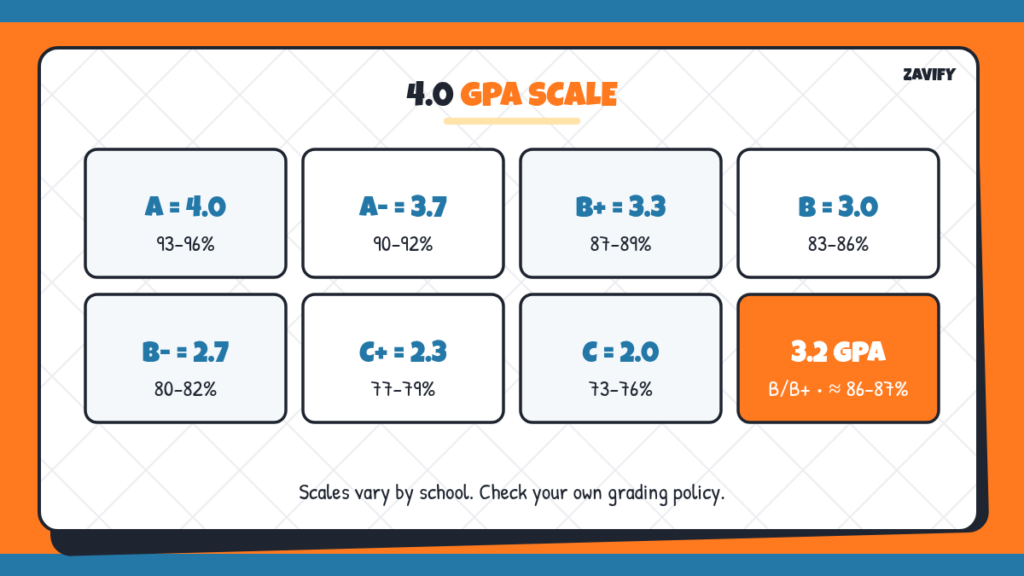
The 3.2 GPA letter grade sits between the B and B-plus rows of a typical conversion table:
| Letter Grade | Percentage | Grade Points |
|---|---|---|
| A | 93–96% | 4.0 |
| A- | 90–92% | 3.7 |
| B+ | 87–89% | 3.3 |
| B | 83–86% | 3.0 |
| B- | 80–82% | 2.7 |
| C+ | 77–79% | 2.3 |
Lower grades have a bigger effect than many students expect. A single C (2.0) in a four-credit class can drop a strong GPA noticeably, which is why a 3.2 sometimes hides a transcript full of good grades and one or two tough ones.
Work out your exact figure with our college GPA calculator.
1. Figure Out What Went Wrong
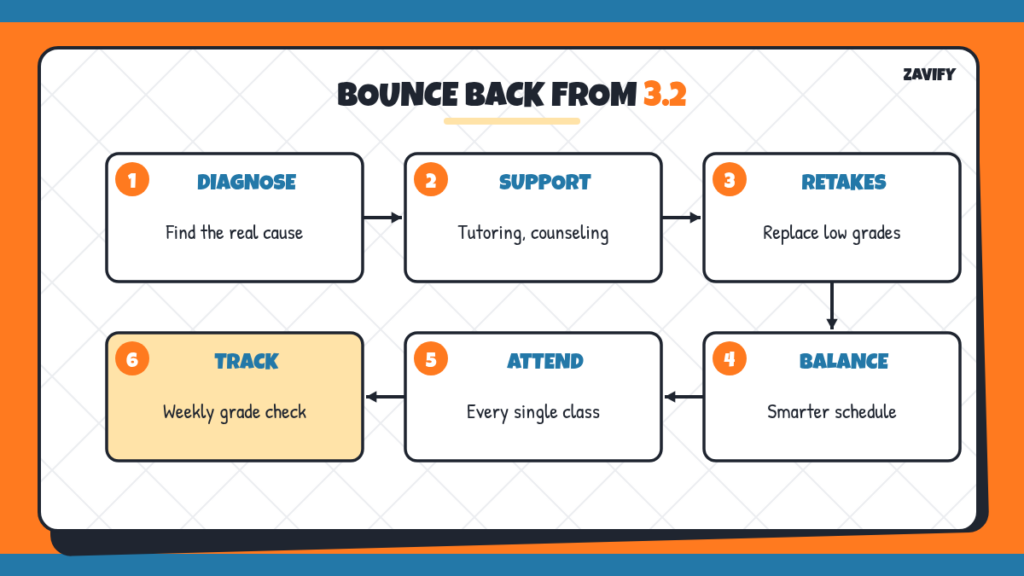
Before planning your comeback, be honest about the cause. Was it time management, a subject you struggled with, too many hours at a job or something going on in your personal life? Each problem needs a different fix, and guessing wastes a semester.
2. Use Campus Support Services
Most schools offer free tutoring, study skills workshops, writing help and counseling. Students who use these services often see quick improvements, yet many never try them. If stress or health affected your grades, speaking to a counselor can help as much as any study tip.
3. Look Into Retake Policies
If one very low grade is holding you back, find out whether your school lets you retake the class and replace the grade. At some colleges the new grade replaces the old one in your GPA entirely. This can make a large difference in a single term.
4. Plan a Lighter, Smarter Schedule
After a tough semester, it can be tempting to take a heavy load to “catch up.” That often backfires. A balanced term, with one or two challenging classes and a couple you feel confident in, gives you the best chance of earning higher grades across the board.
5. Go to Every Class
It sounds basic, but attendance has a strong link to grades. Teachers often explain what will be on the exam, give hints about assignments and reward participation. Missing class means missing all of that.
6. Keep a Simple Grade Tracker
Make a spreadsheet or note with every class, its grade breakdown and your current scores. Update it weekly. When you can see your numbers, it is much easier to spot a problem early and fix it before the final.
7. Understand How Transfer Credits Work
Some students take summer classes at a community college to get ahead. That can be a great idea, but at many universities transfer credits count toward your degree without being included in your GPA. If your goal is to raise your GPA, check your school’s rules first.
8. Get Ahead of Deadlines
Put every due date for the term into one calendar during the first week. Then set your own deadline two days earlier. That buffer protects you from late penalties and gives you time to improve your work.
9. Build Experience Alongside Your Grades
Grades are one part of your profile. Internships, part-time jobs, research projects and leadership roles all show employers and graduate programs what you can do. A 3.2 GPA combined with strong experience is often more convincing than a higher GPA with nothing else.
What Grades Make a 3.2 GPA?
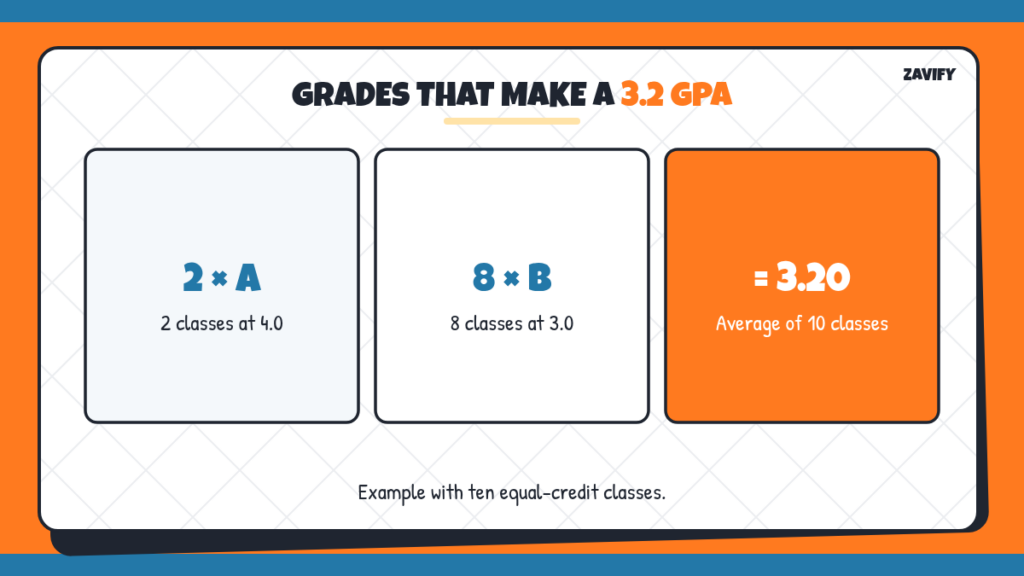
Here is a simple example. Across ten equal-credit classes, two A’s (4.0) and eight B’s (3.0) give an average of exactly 3.20. Another student might reach the same number with several B-pluses and one C.
That second example matters. If your 3.2 includes a low grade, fixing that one class through a retake or doing well in the next course in the sequence can raise your GPA faster than you might expect.
Is a 3.2 GPA Good for College?
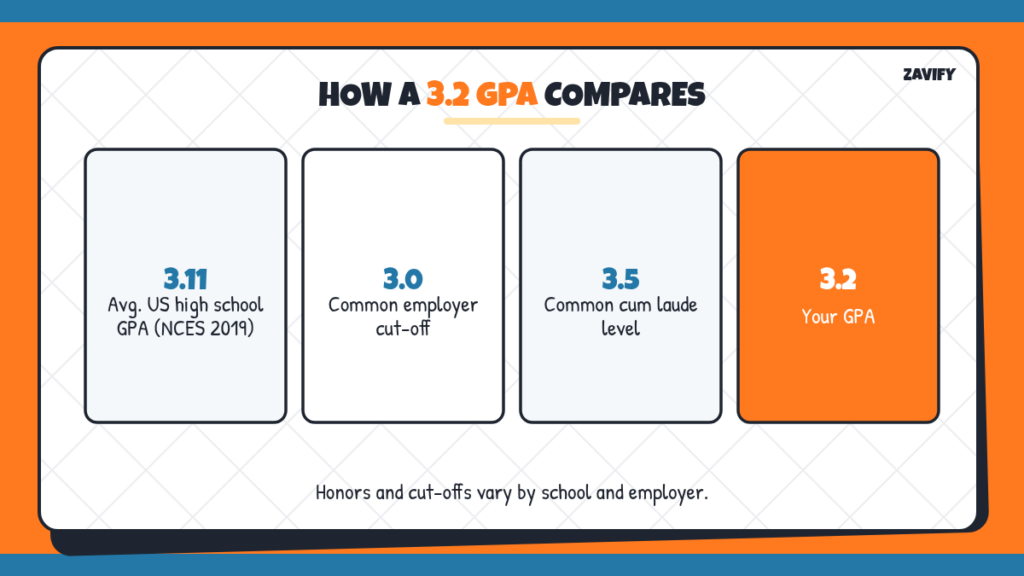
Yes, for many schools. A 3.2 GPA gives you good options at a wide range of public universities, regional colleges and private schools. Your course choices, essays, activities and, where submitted, test scores can all strengthen your application.
Selective colleges usually expect higher grades. If you are applying to them, an upward grade trend helps a lot. A student whose grades improved from 2.9 to 3.5 over three years tells a very positive story, even if the overall average is a 3.2.
Is a 3.2 GPA Good for Scholarships and Jobs?
Many scholarships and state awards set their minimum at 3.0, which a 3.2 meets. Competitive merit scholarships often ask for 3.5 or more, so read each award’s rules carefully.
For jobs, a 3.2 clears the 3.0 screen that many employers use. For competitive roles, pair it with internships, projects and relevant skills. See our guide on whether to put your GPA on your resume for practical advice.
How Much Can You Raise a 3.2 GPA?
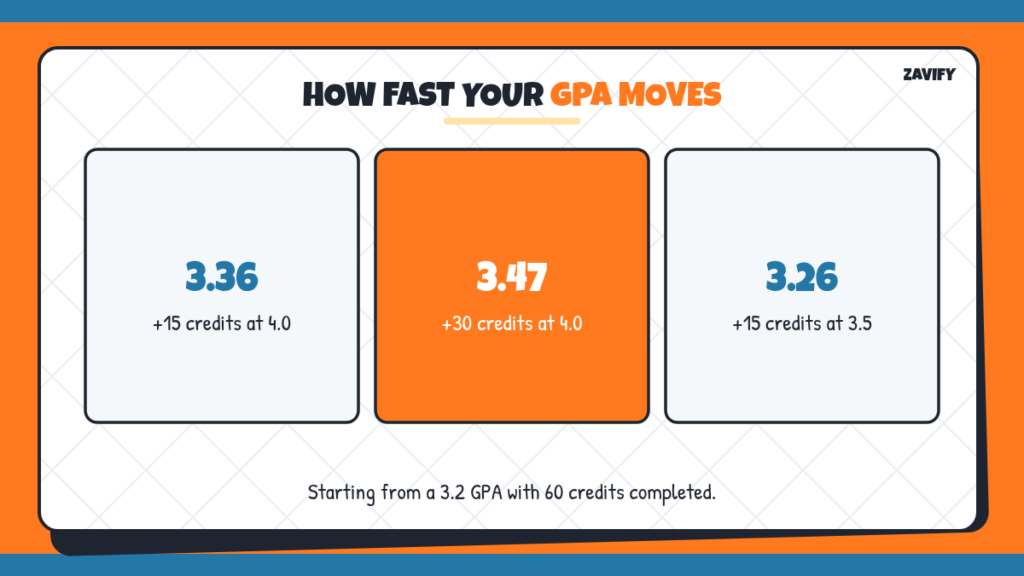
Here is an example for a college student with a 3.2 GPA and 60 credits:
| Next Credits | Average Grade | New GPA |
|---|---|---|
| 15 credits | 4.0 | 3.36 |
| 30 credits | 4.0 | 3.47 |
| 15 credits | 3.5 | 3.26 |
Even one strong semester makes a visible difference. For more strategies, read our guide on how to raise your GPA.
Is a 3.2 GPA Good for Grad School?
Many master’s programs list 3.0 as their minimum GPA, so a 3.2 meets the basic requirement. More competitive programs, and fields such as medicine and law, usually expect higher grades. In that case, strong test scores, relevant work experience and an upward trend in your final two years can make up a lot of ground. Some programs also look most closely at your last 60 credits, which is another reason a strong finish matters.
A Real-World Example of Bouncing Back
Picture a student who finishes freshman year with a 2.8 after struggling to adjust to college. In sophomore year they start using tutoring, cut back their work hours and take a balanced schedule. They earn a 3.5 that year, which brings their cumulative GPA to about 3.15. By the end of junior year, with another strong year, they are close to 3.3.
On paper, that student has “only” a 3.2 at one point. In an interview or application, though, the rising trend is what stands out. Employers and admissions officers tend to value evidence that you can recognize a problem and fix it.
Common Mistakes With a 3.2 GPA
These habits often keep students from moving past a 3.2:
- Taking a very heavy load to “catch up.”
- Not using free tutoring and support services.
- Assuming summer transfer credits will raise their GPA.
- Missing class and losing participation points.
- Focusing only on grades and ignoring experience.
Frequently Asked Questions
Is a 3.2 GPA good?
Yes. It is slightly above average and meets the 3.0 minimum used by many colleges, scholarships and employers.
What is a 3.2 GPA in letter grade?
It falls between a B and a B-plus on the standard unweighted 4.0 scale.
What percentage is a 3.2 GPA?
It is roughly 86–87% on most US grading scales, though your school’s scale may differ.
Can I get into a good college with a 3.2 GPA?
Yes. Many good public and private colleges admit students with a 3.2, especially if their grades are improving and their application is strong.
Is a 3.2 GPA good in college?
The average college GPA is commonly reported at around 3.1 to 3.2, so a 3.2 is around or slightly above average.
How can I raise my 3.2 GPA quickly?
Retake low-grade classes if your school allows it, take a balanced schedule and use tutoring. Earlier in your degree, your GPA moves faster.
Conclusion
A 3.2 GPA is a solid starting point. It sits between a B and a B-plus, works out to roughly 86–87% and places you slightly above the average student.
If you want to raise it, start by understanding what held you back, then use campus support, retake policies and a smarter schedule. Compare your position with our 3.0 GPA and 3.5 GPA guides, and read what counts as a good GPA to set your next target.